Xeriscaping fails in one of two directions: the gravel moonscape with three sad shrubs, or the "low water" bed that quietly filled with thirsty plants. The fix for both is designing with structure first and seeing the mature sizes honestly. Painted Acre paints the plan on your actual front yard so the boulders, gravel bands, and plant masses read at true scale before you move a single ton of rock.
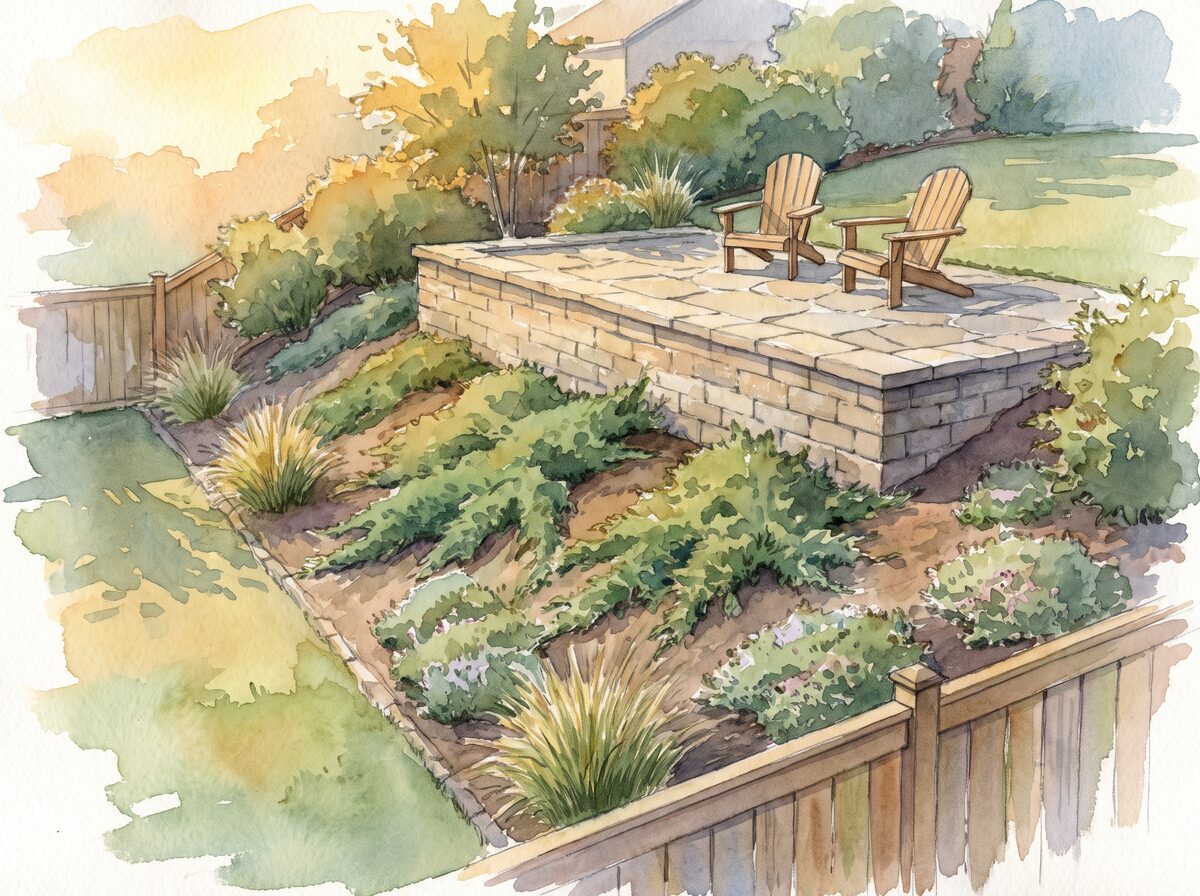
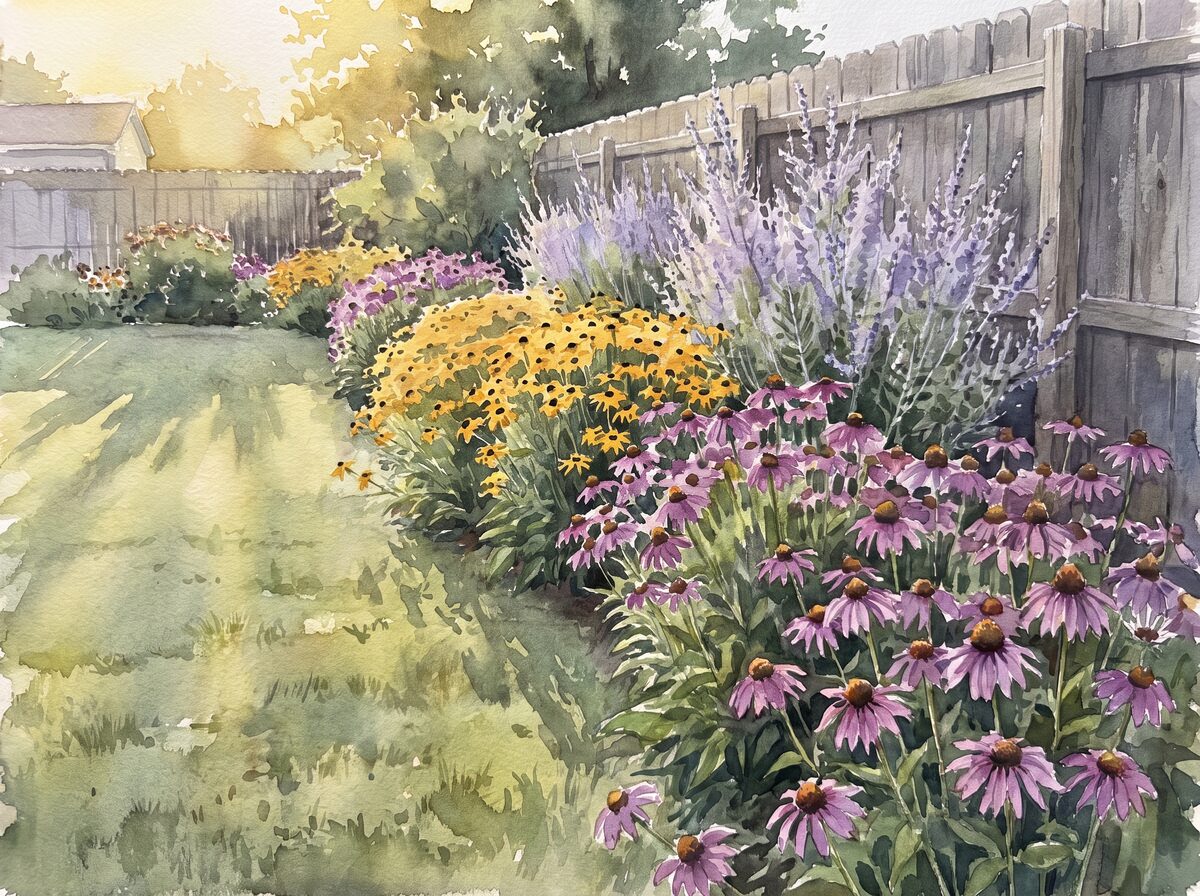
Each of these is a different answer to the same three questions: how much rock you move, how much lawn survives, and how long you are willing to look at bare gravel. Open any of them in the studio and try it on your own front yard.
Boulder scale is the thing nobody gets right on paper — a three-foot stone that looks enormous in the yard looks like a pebble from the street, and eight tons is not a delivery you re-do. Painted Acre starts from a photo of your actual house, paints it as a watercolor, and sets the rock and the gravel bands exactly where you place them, at true mature plant sizes — so you can see whether it reads as designed or as a parking lot before the truck backs up the driveway.
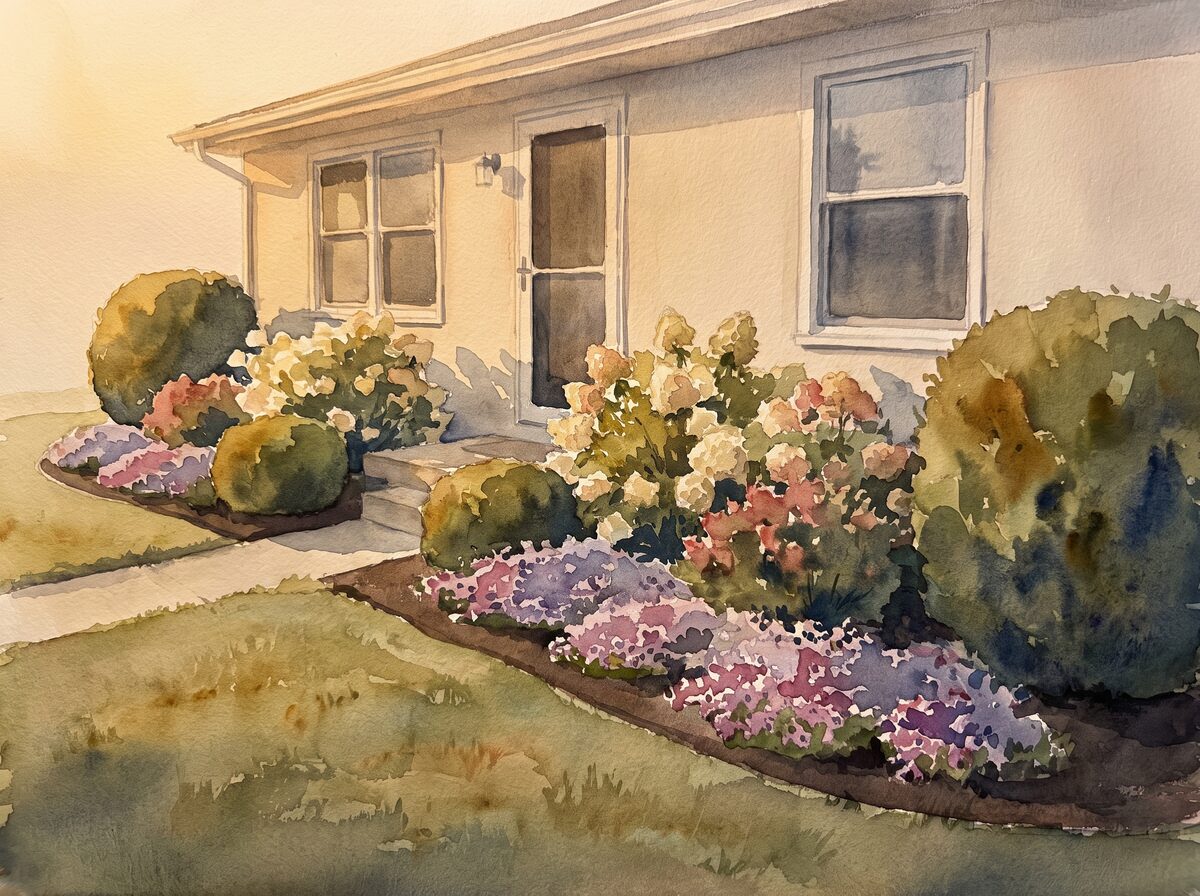
This is the starting photo. Upload one of your own and the studio paints it the same way.
Paint my yardUpload a photo of your front yard, place the boulder groups and gravel bands first, mass the silvers against them, then drag the timeline and see which year the stone stops being the main event.
Drop the boulder groups and drag the gravel bands before a single plant goes in — the studio paints them buried, not perched.
Every mass carries the year it goes in — the rock and the anchor sage now, the entry lavender next spring, the juniper carpet when the budget recovers.
Drag the slider to year three and see whether nine russian sage covers the ground or leaves you a gravel lot, then print the plan and the rock order.
A xeriscape runs the opposite way round from a perennial border: it looks most finished the week it is built, then goes quiet while eight tons of gravel slowly gets covered up. Every frame below is the same sample plan rendered by the studio.
Set the boulders and gravel geometry before any plant enters the plan, they are the bones the design hangs on. Odd-numbered boulder groups, partially buried so they look geological, and a gravel palette that picks up your roof color. When the hard structure is right, even a young sparse planting looks intentional.
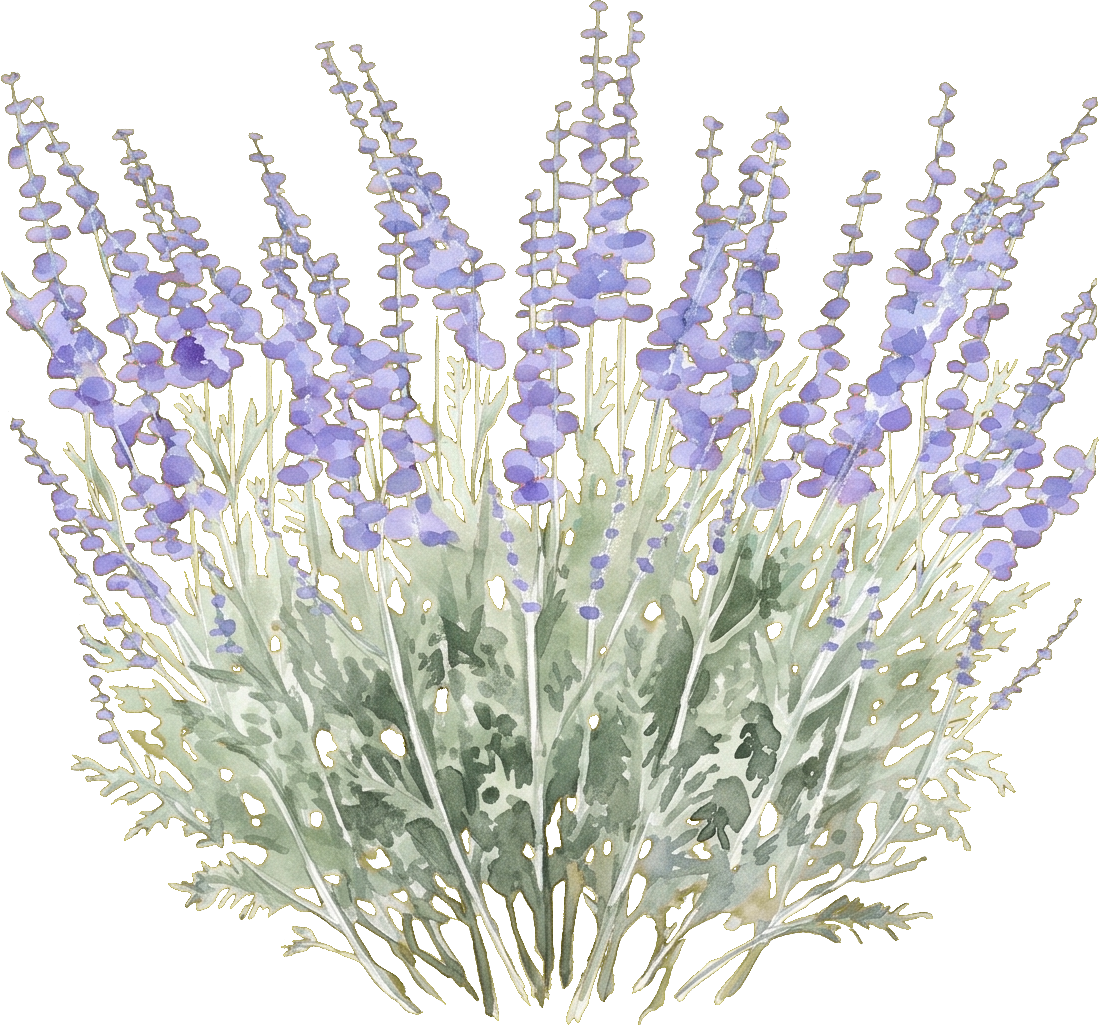
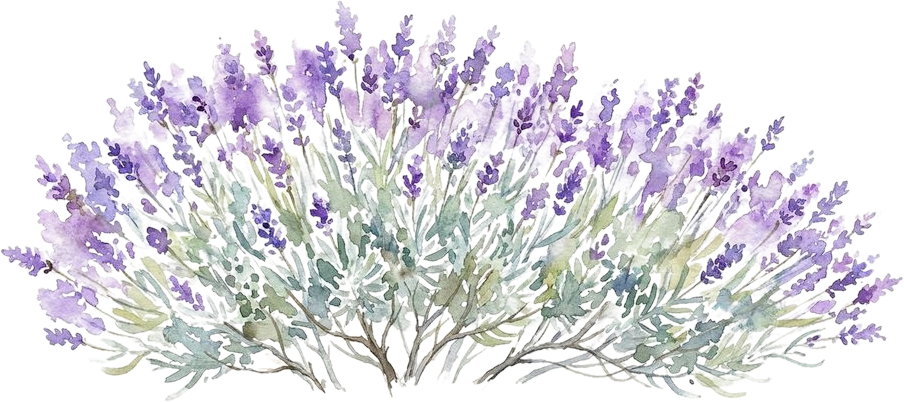
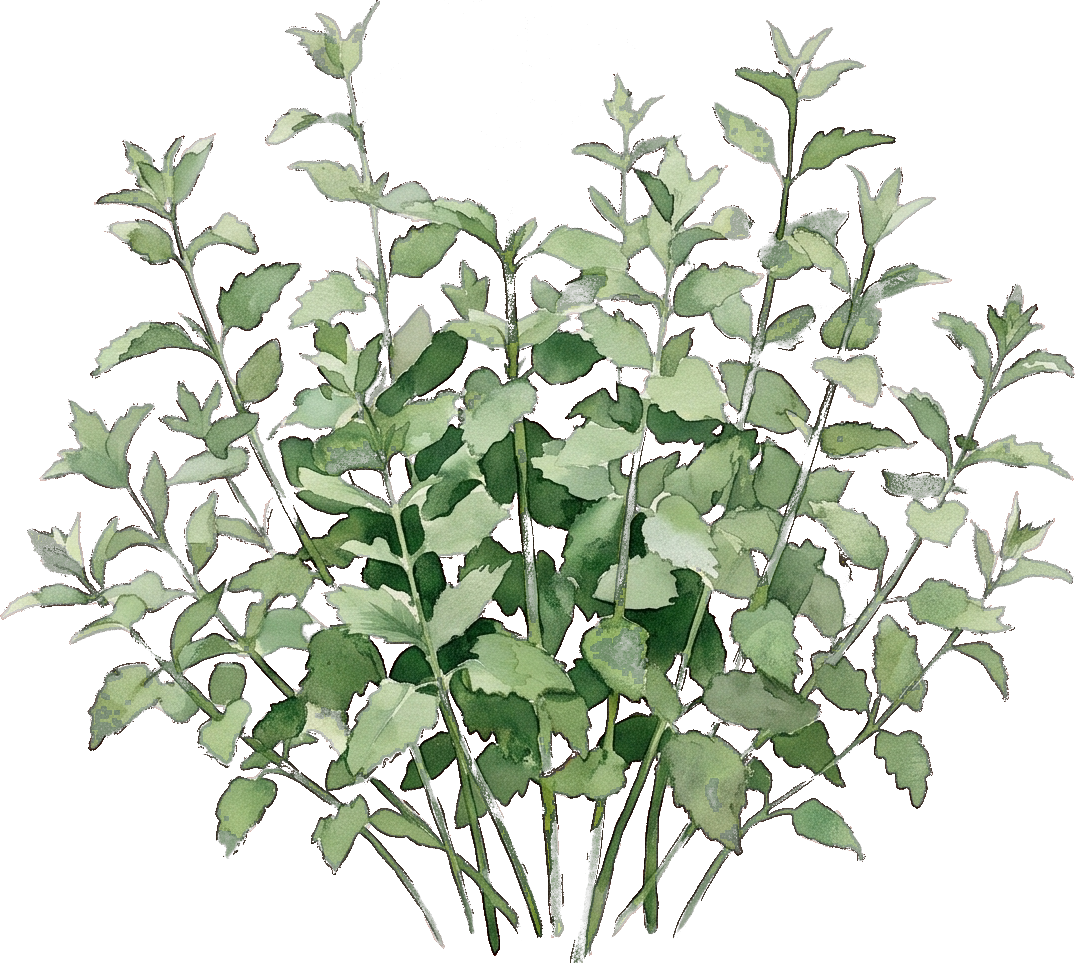
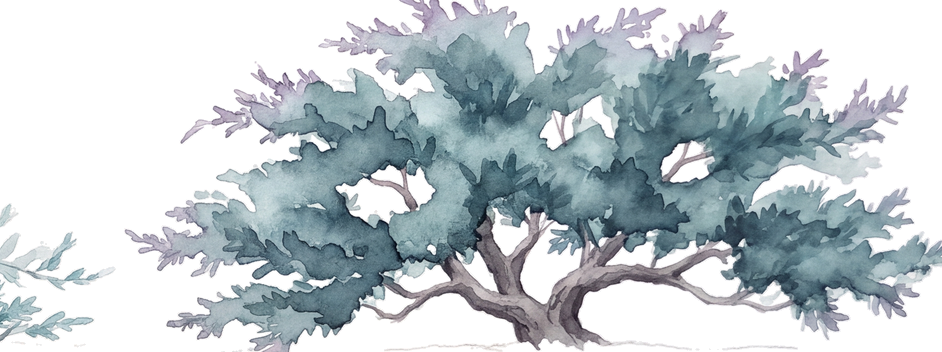
Low-water plants tend to silver, blue, and gray foliage. Mass them the same way you would perennials, in drifts of five or more, and let each mass breathe against the gravel. Russian sage, lavender, catmint, and creeping juniper give four different heights of the same drought-proof palette.
A true xeriscape still has one or two moments of luxury, a small high-impact bed near the door on drip irrigation. Zone the yard by water need: the entry bed gets drip, the masses get establishment watering for two summers, the gravel gets nothing, ever.
This one is front-loaded and there is no honest way around it: killing the lawn and landing the stone is most of the money, and it all lands before anything grows — the plants are the cheap part, and one-gallon pots catch a five-gallon within two seasons anyway. What you buy with it is a front yard with no mower, no sprinkler zone, and no replanting, which is why the conversion generally squares up in three to six years in a dry-summer market. If the whole number is too big, split the yard at the walk and do one side this year; the boulders are set in groups, so half a plan still reads as a plan. A year-by-year sheet with the rock order and the plant counts, ready to hand a stone yard, is exactly what the printable Painted Acre report gives you.
Silver, blue, and structural, and none of it asks for a sprinkler once established. Every plant is painted at every age, and your ZIP filters the palette to your zone.
A 4 ft silver-blue anchor mass that shrugs off drought and heat.
Entry-bed luxury on a water budget; fragrance at the front door.
Silver-blue mounds that repeat beautifully along a gravel band.
A pink-flowered groundcover mat between boulders, zero water once rooted.
The evergreen carpet that holds the design together in winter.
Buried a third deep, in odd-numbered groups. The bones of the whole design.
Yes, and that is the sensible order. Upload a photo of the front of your house, draw the gravel bands and boulder groups, mass the planting, then drag the years forward. You can try it on a sample yard first, and no account is needed.
That is the product. A photo of your own frontage is painted into the watercolor canvas, so every decision happens against your real facade, driveway and street line rather than a generic template.
Yes. Gravel areas, boulder groups and paths are drawn on the canvas alongside the planting, which matters here because the hardscape is most of what a xeriscape front yard actually looks like.
Enter your ZIP and the palette filters to your USDA hardiness zone. Xeriscape principles apply well outside the desert, and the palette shifts to the dry-tolerant plants that survive your winters rather than someone else's.
A watercolor of the designed frontage, the growth view from year one to year twenty, and a printable report with a to-scale plan view from above, a year-by-year plan and a shopping list with price estimates.
Start from a photo of your own front yard, set the boulders and bands from any of the designs above, and see it at mature size before the stone yard loads the truck.