Getting the shape and placement right
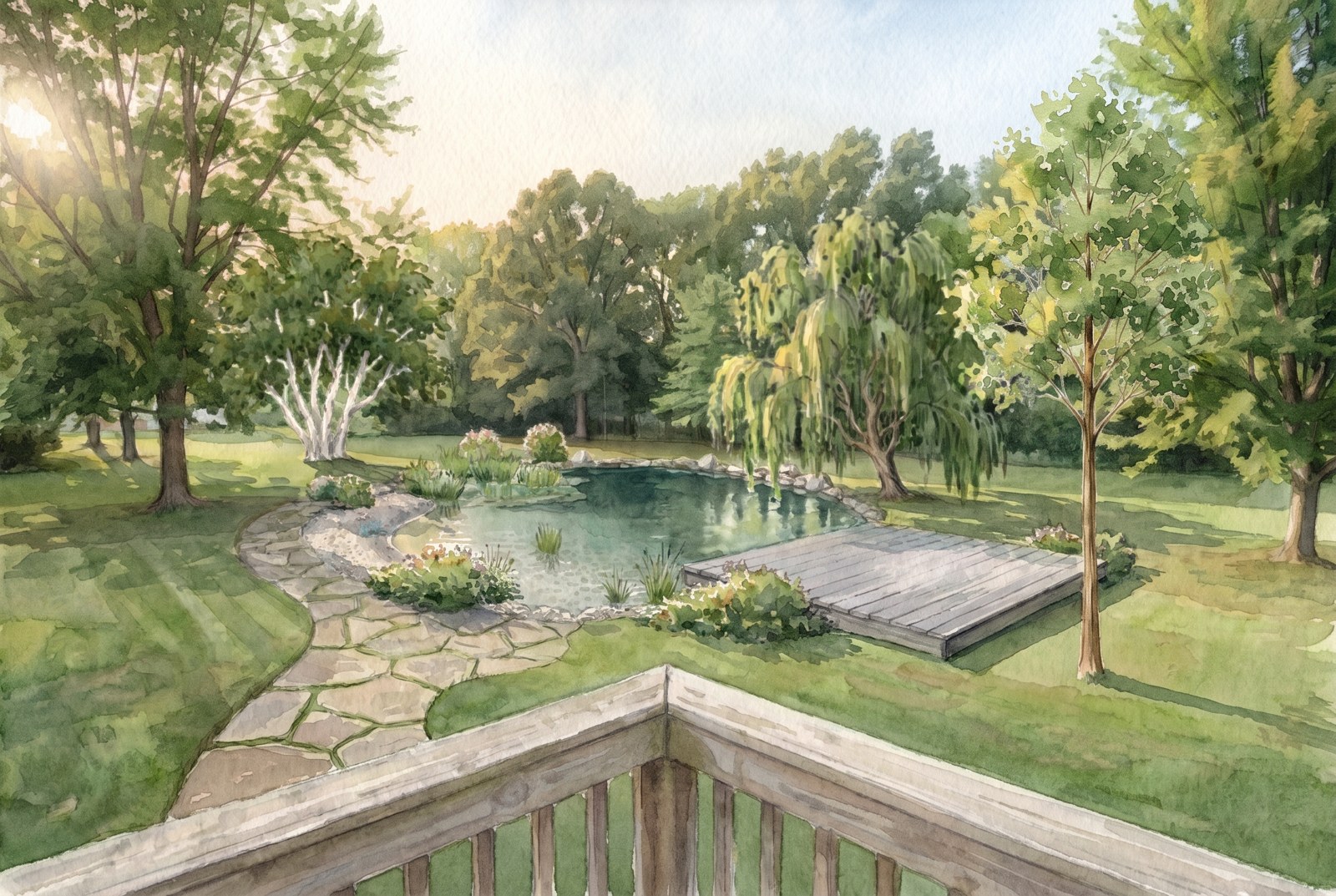
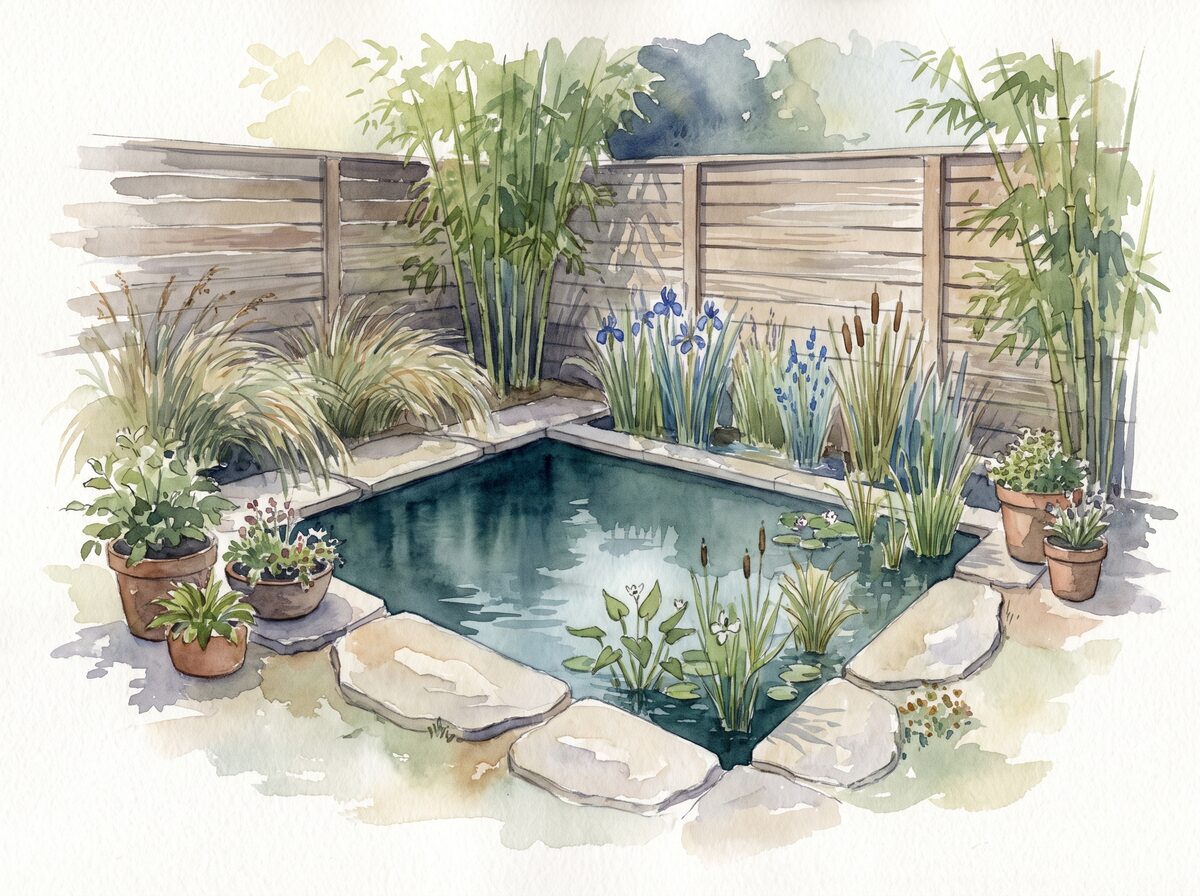
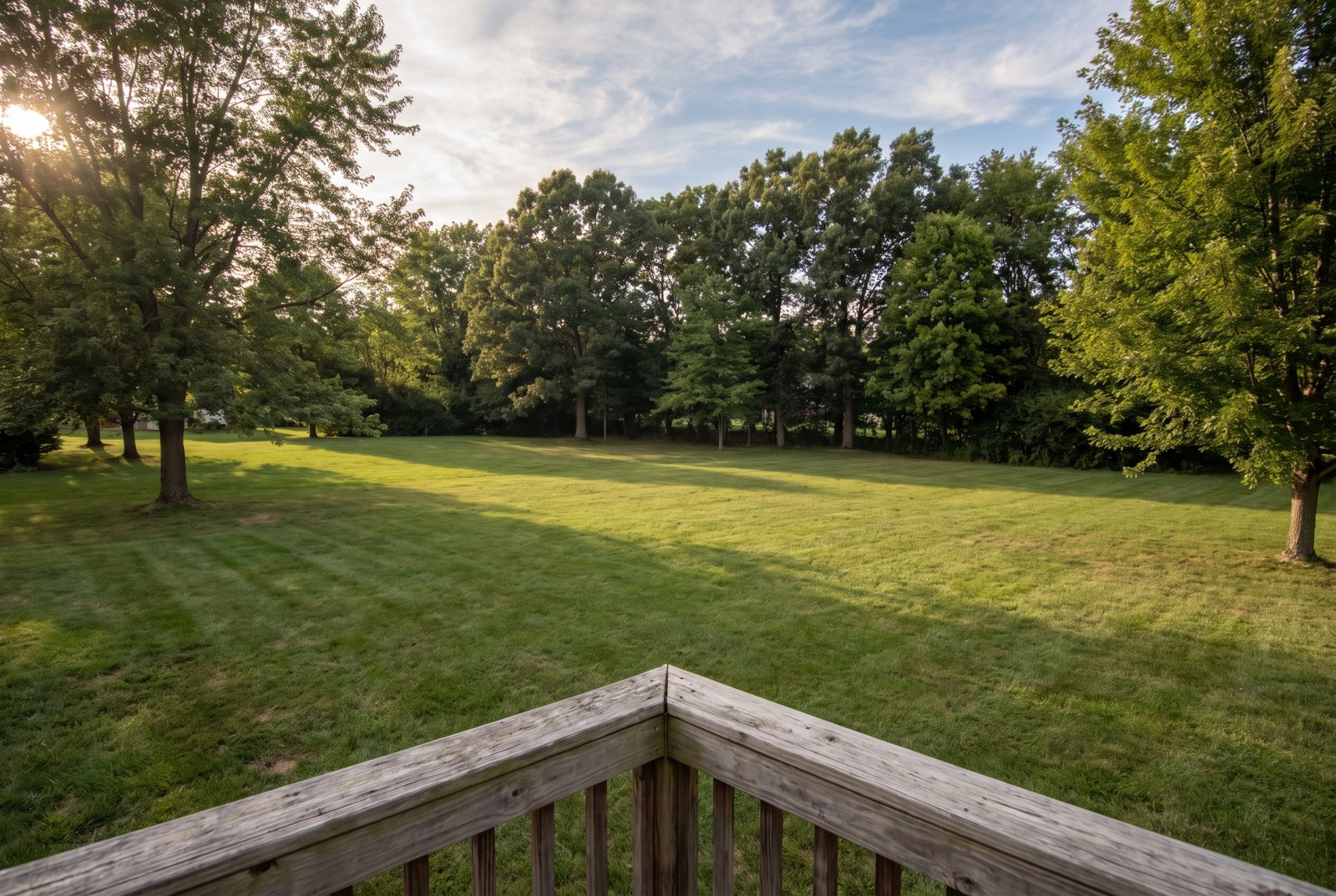
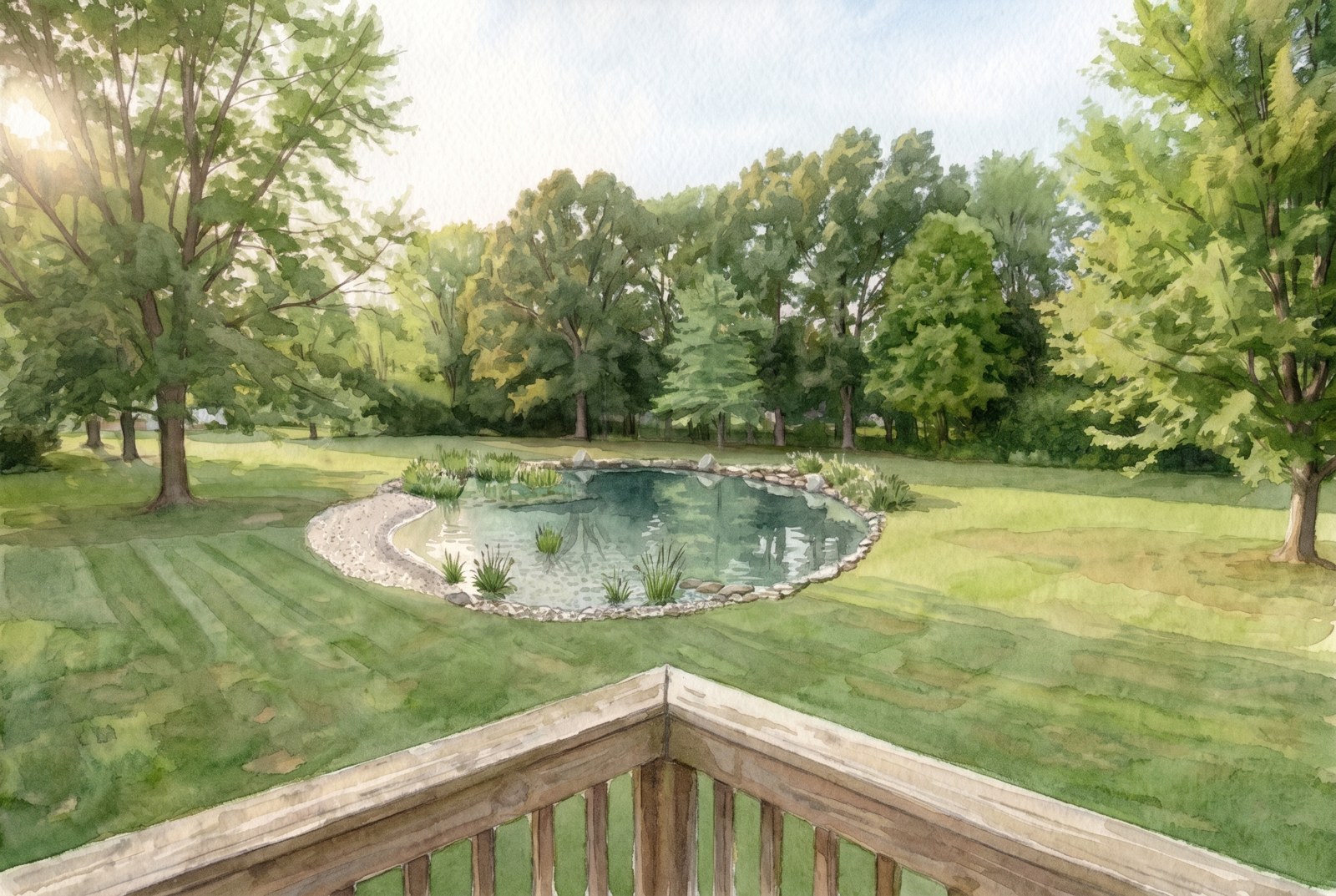
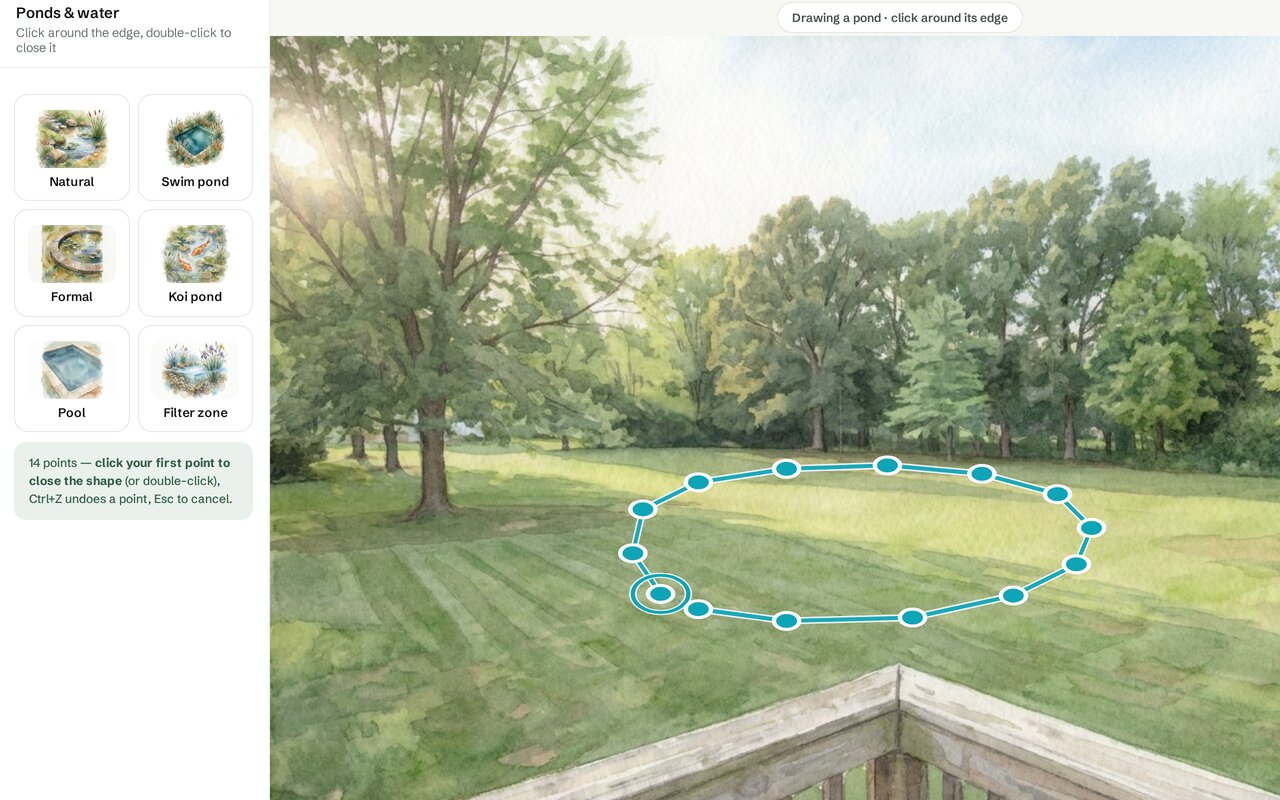
Natural pools want sun for warmth, distance from big deciduous trees that would load the water with leaves, and ground an excavator can actually reach. Draw the footprint on a painting of your own lot first: an organic outline reads as natural, and a roughly even split between swim zone and planted regeneration zone is the classic starting ratio. Placing it on a real image of your yard settles arguments a graph-paper sketch never can.
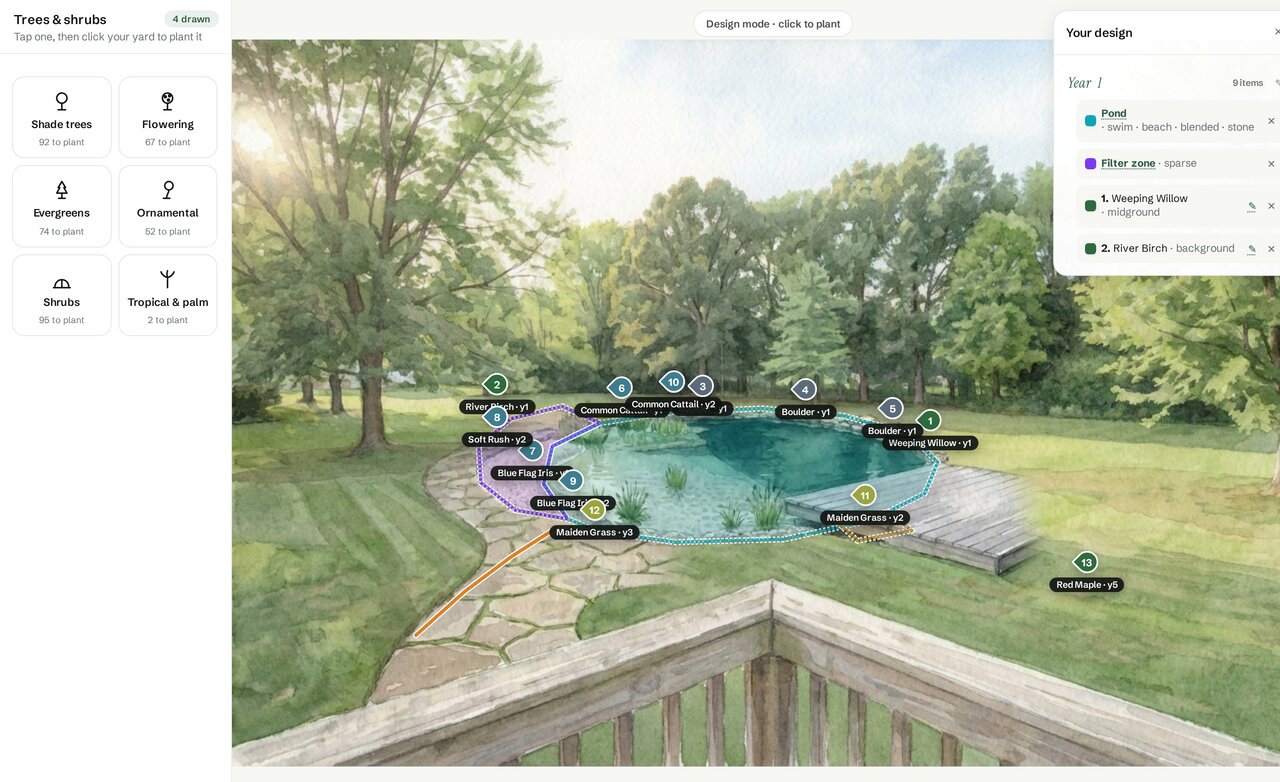
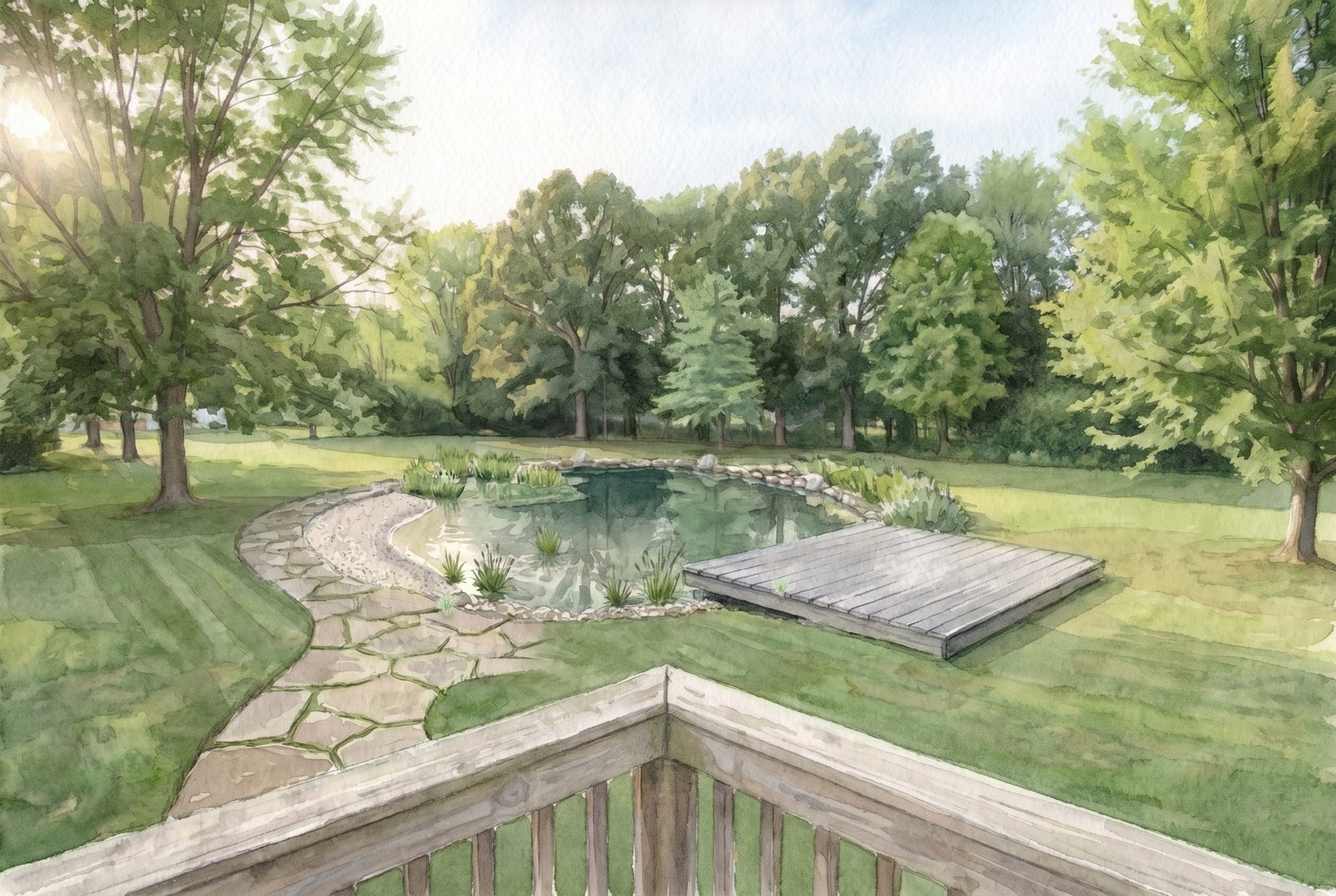
Year one of the sample plan — the shape and placement settled on the real lot.
Planting the edges is what makes it natural
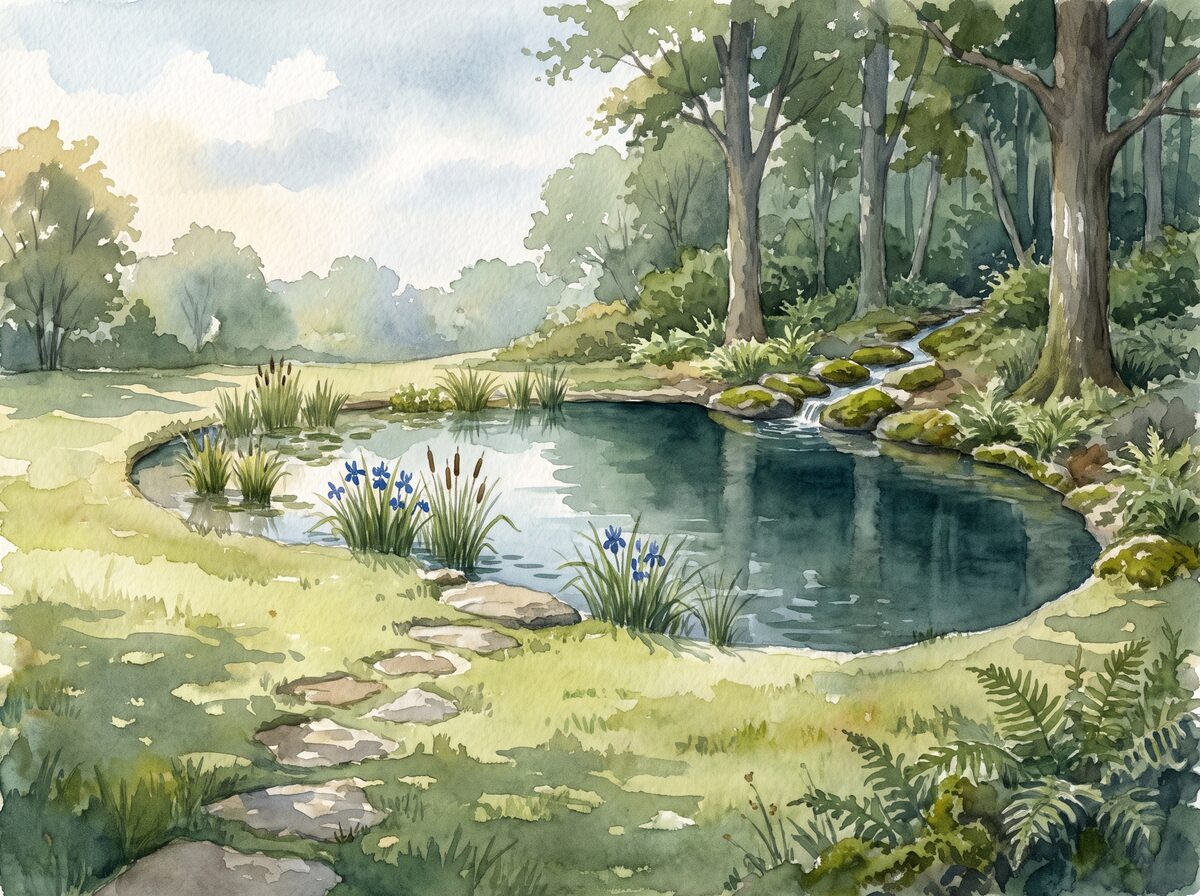
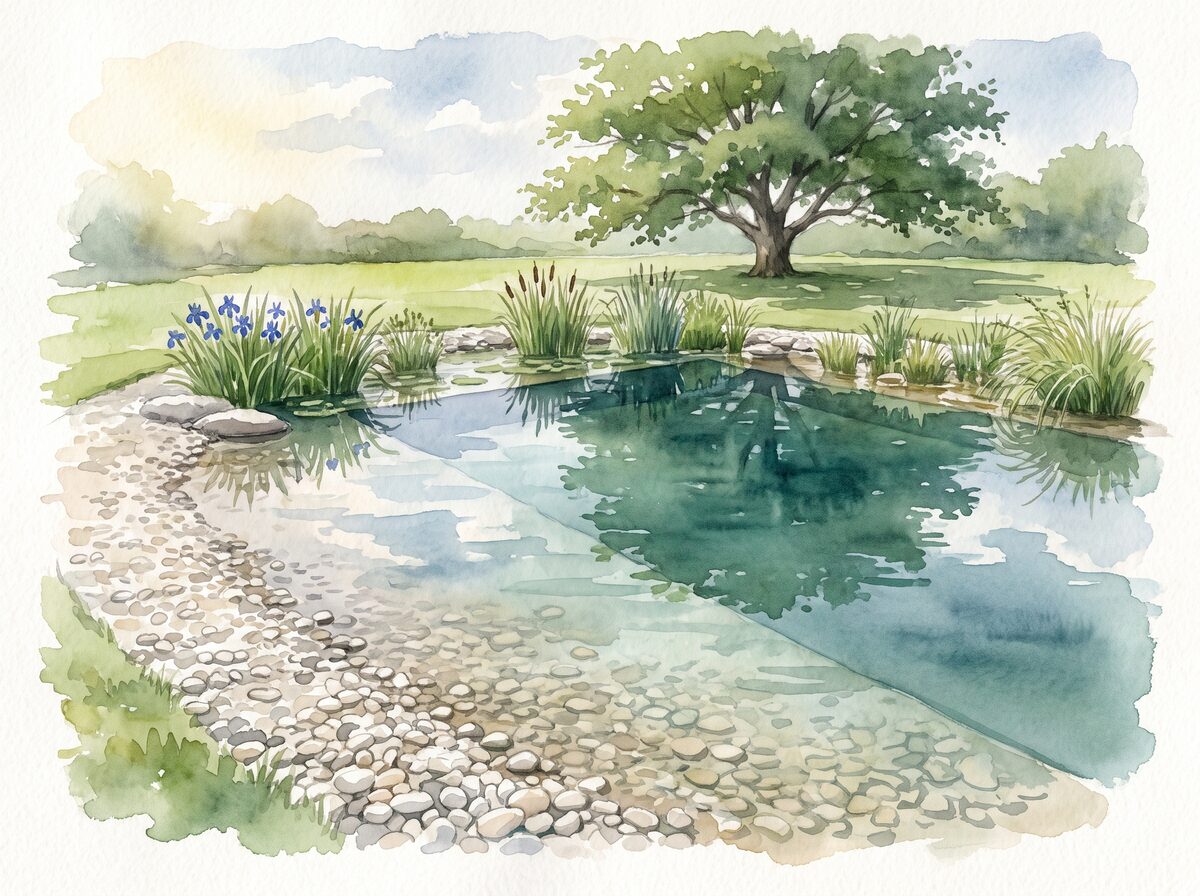
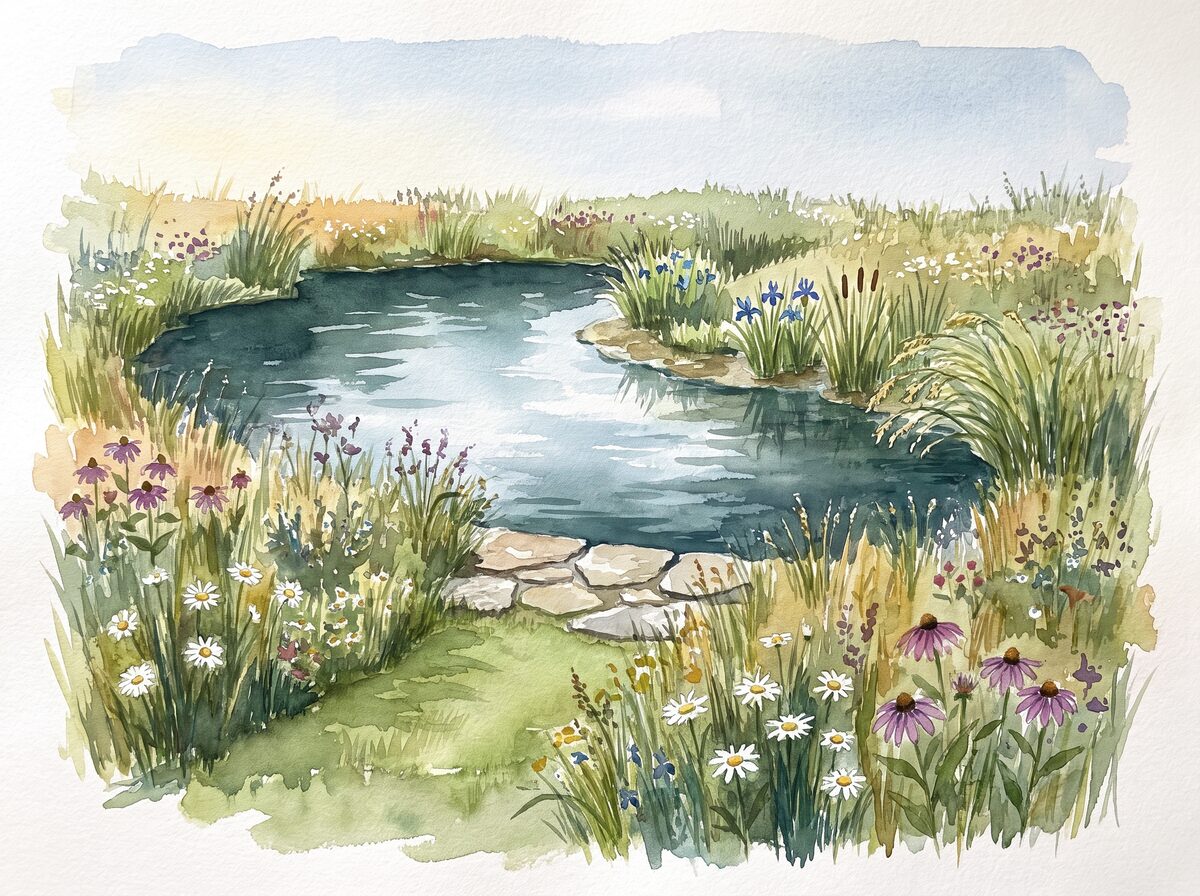
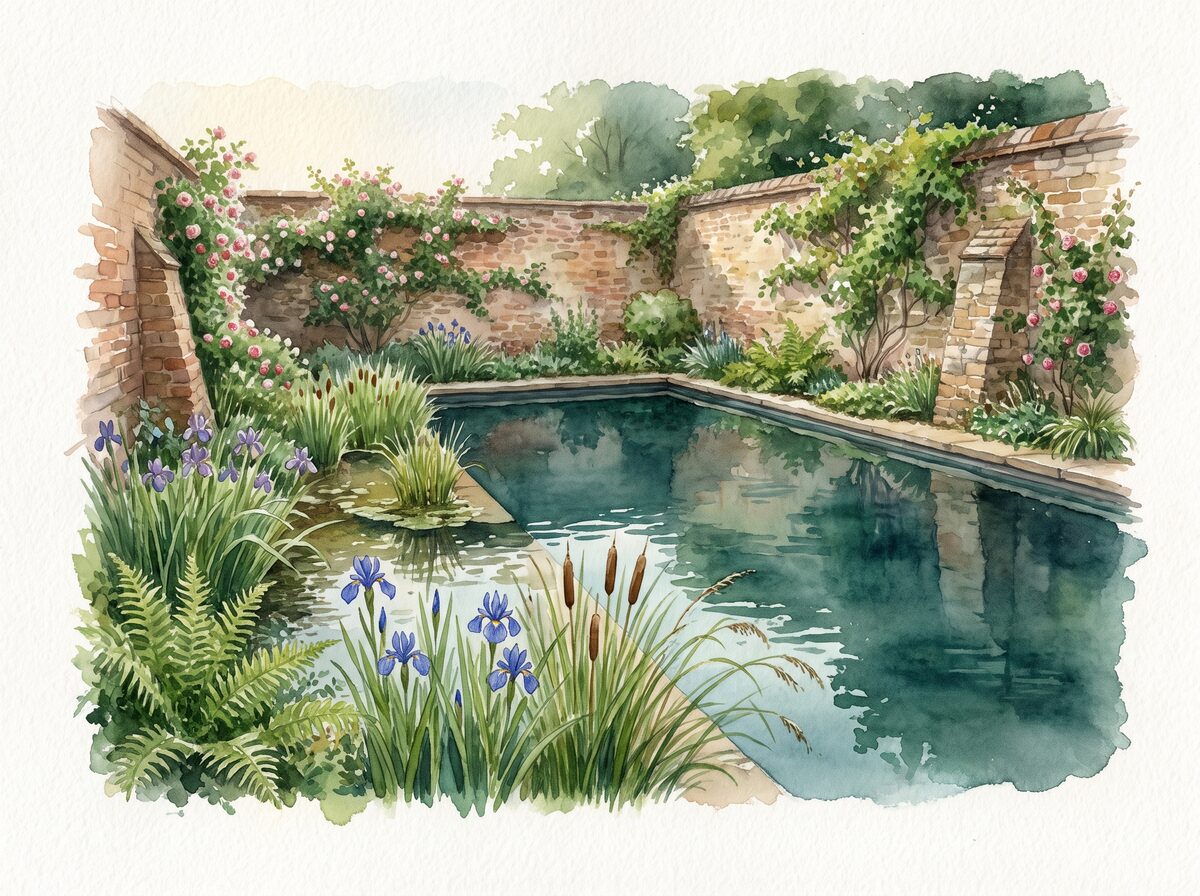
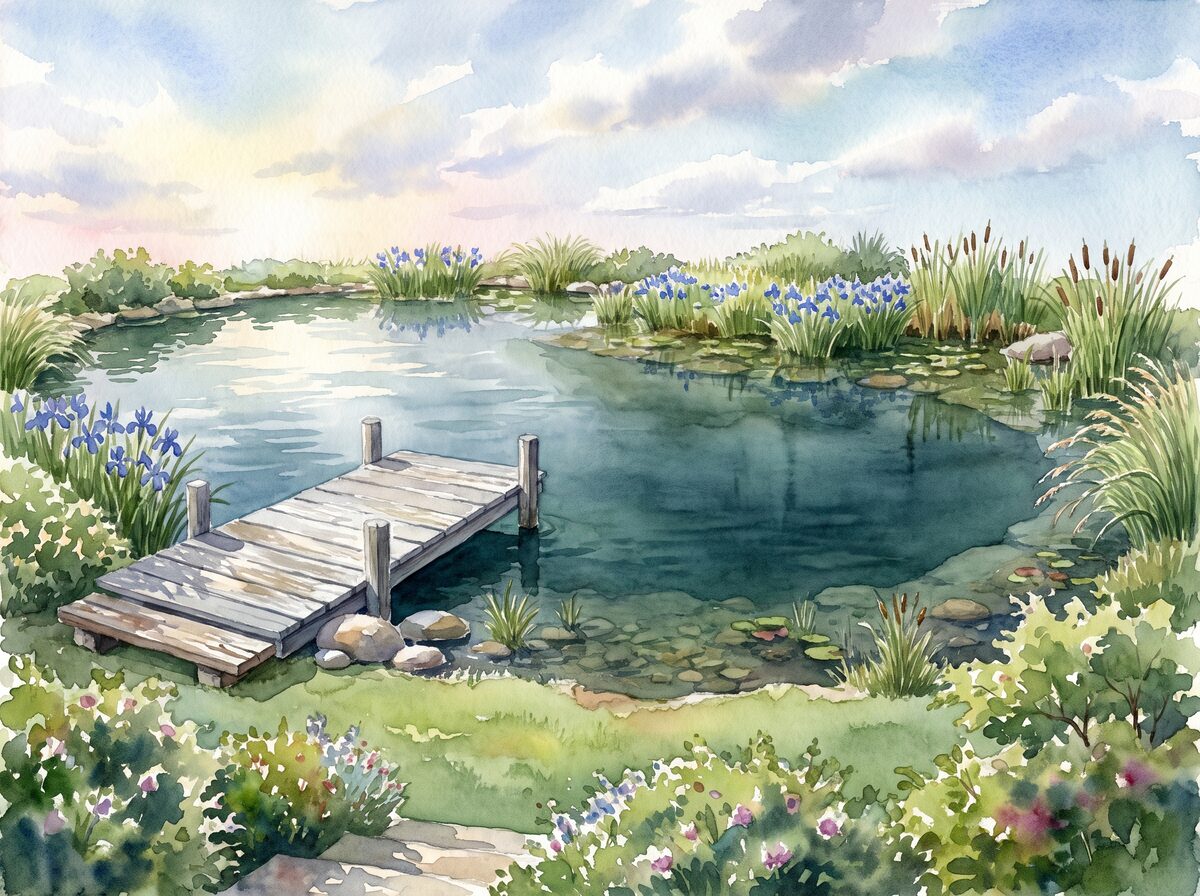
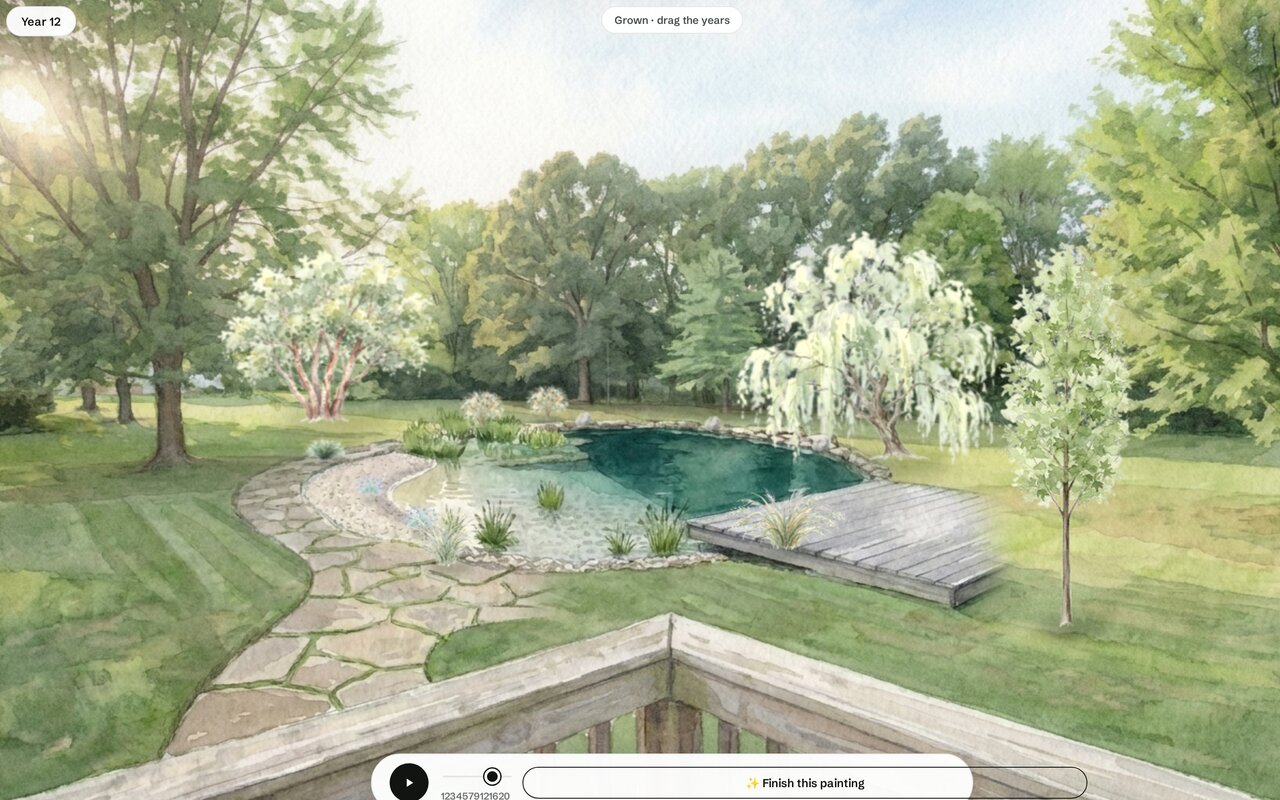
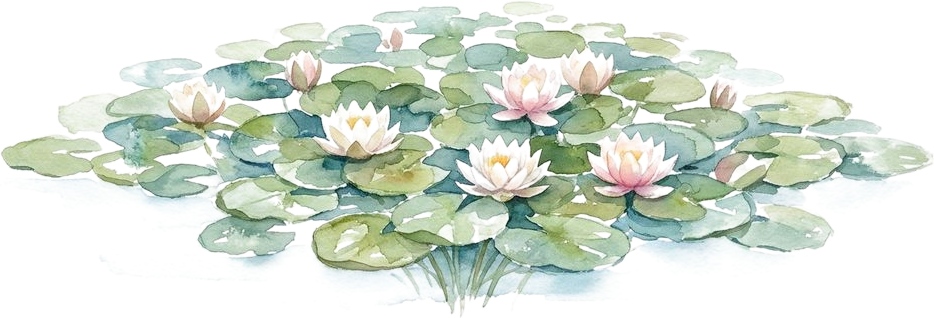
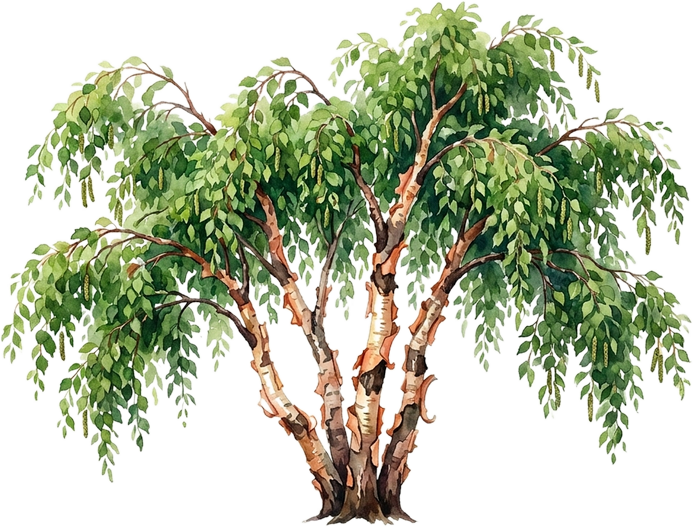
The regeneration shelf carries marginal plants that scrub nutrients and keep the water clear. Around the banks you want grasses that arch over the waterline, a weeping tree for the classic reflection, and a birch or two for vertical structure. Growth is the whole story here: bank plantings look sparse the first two summers, then become the reason the pond looks like it was always there by year eight.
Budget honestly, phase confidently
Built professionally, natural swimming ponds commonly run $50,000 and up; owner-built versions can cost a fraction of that. Either way, you phase it: dig and line in year one, hardscape the beach edge in year two, and let the plantings compound every year after. A year-by-year plan you can hand a contractor, with a shopping list, is exactly what the printable Painted Acre report gives you.
The pond plan · Zone 6a Ohio
Year 1
Water in — the pond and its biology
Swim pond · beach entry≈ 45 × 30 ft · dig & line
Regeneration shelfplanted sparse · does the biology
Weeping Willow6–8 ft whip · far bank
River Birch + boulders × 3the stone bank
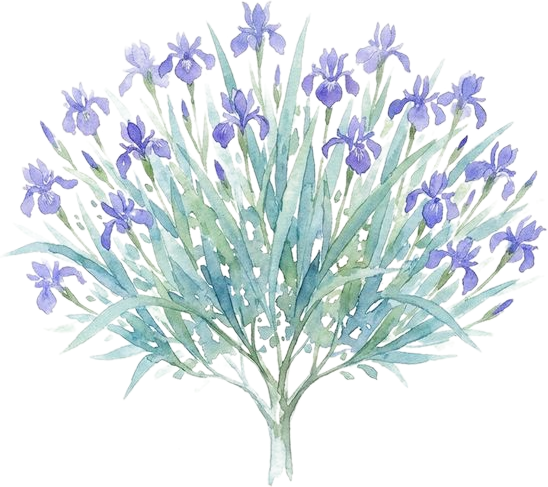
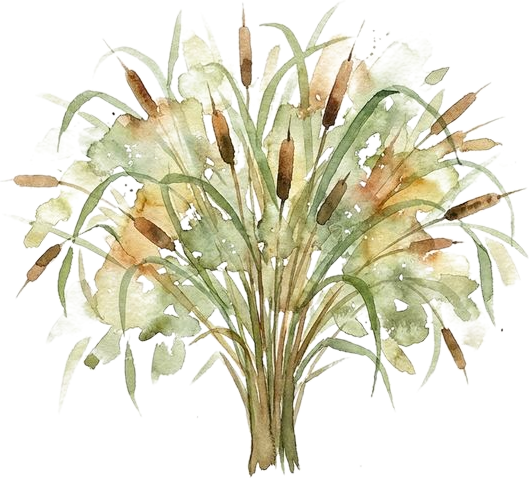
Blue Flag Iris · Cattailshelf plugs, first season
To do this year
Excavate and line in late spring; fill slowly
Plant the shelf as the water settles and clears
Stake the willow for one season only
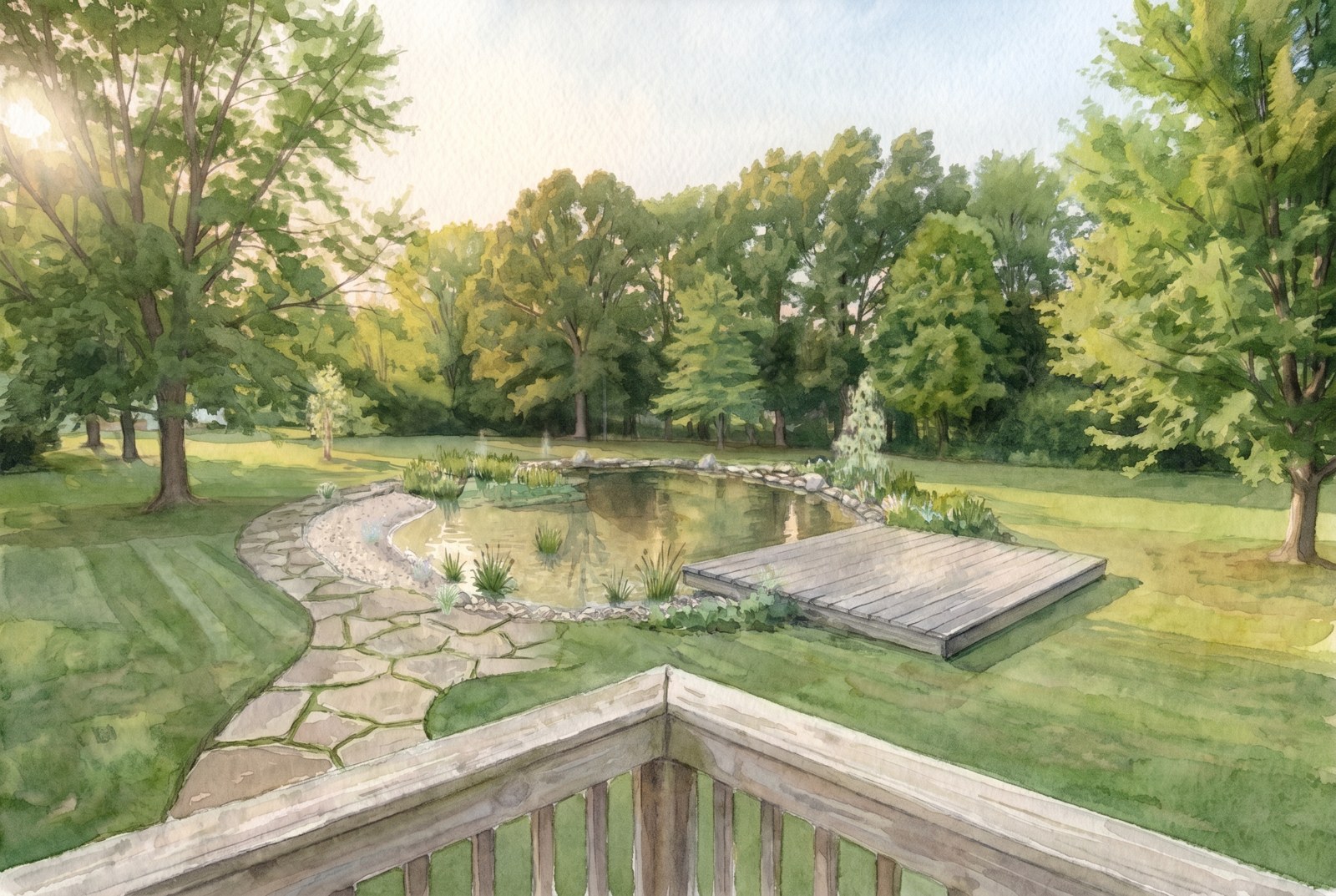
Year 2
Hardscape — the deck at the deep end
Build the weathered wood deck once the banks settle
Thicken the shelf: soft rush, more iris and cattail
Maiden grass at the deck corner
Year 3
The flagstone path reaches the beach
Lay flagstone from the porch to the beach entry
Year 5: a red maple joins the near bank
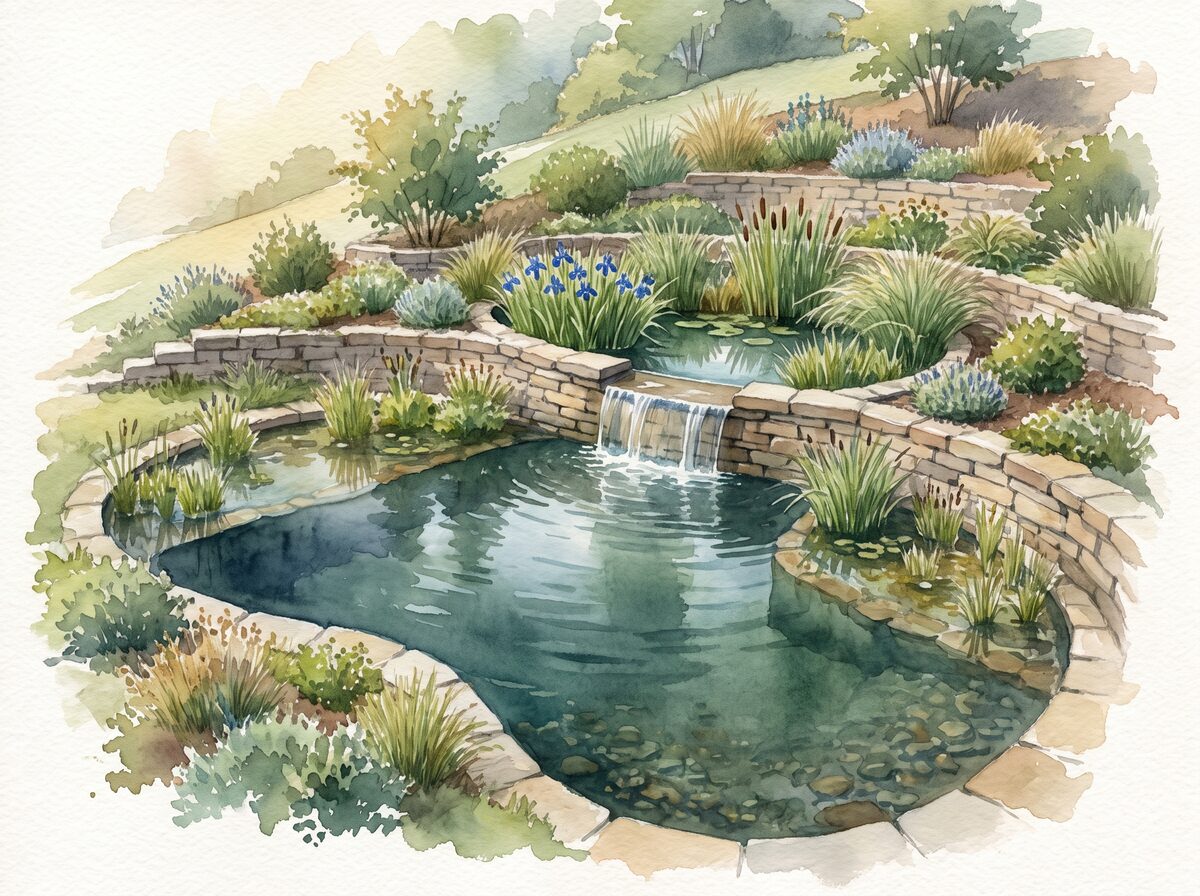
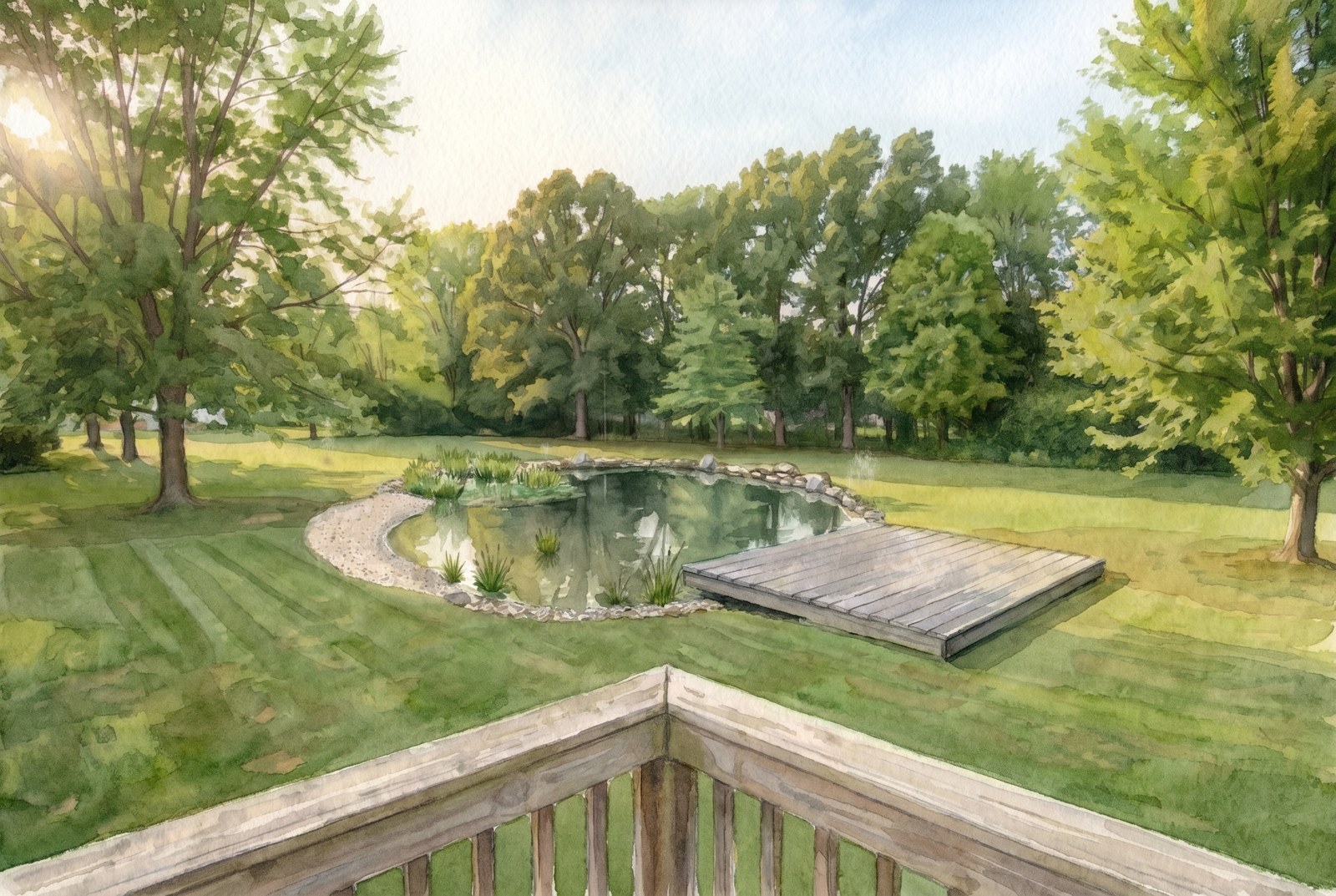
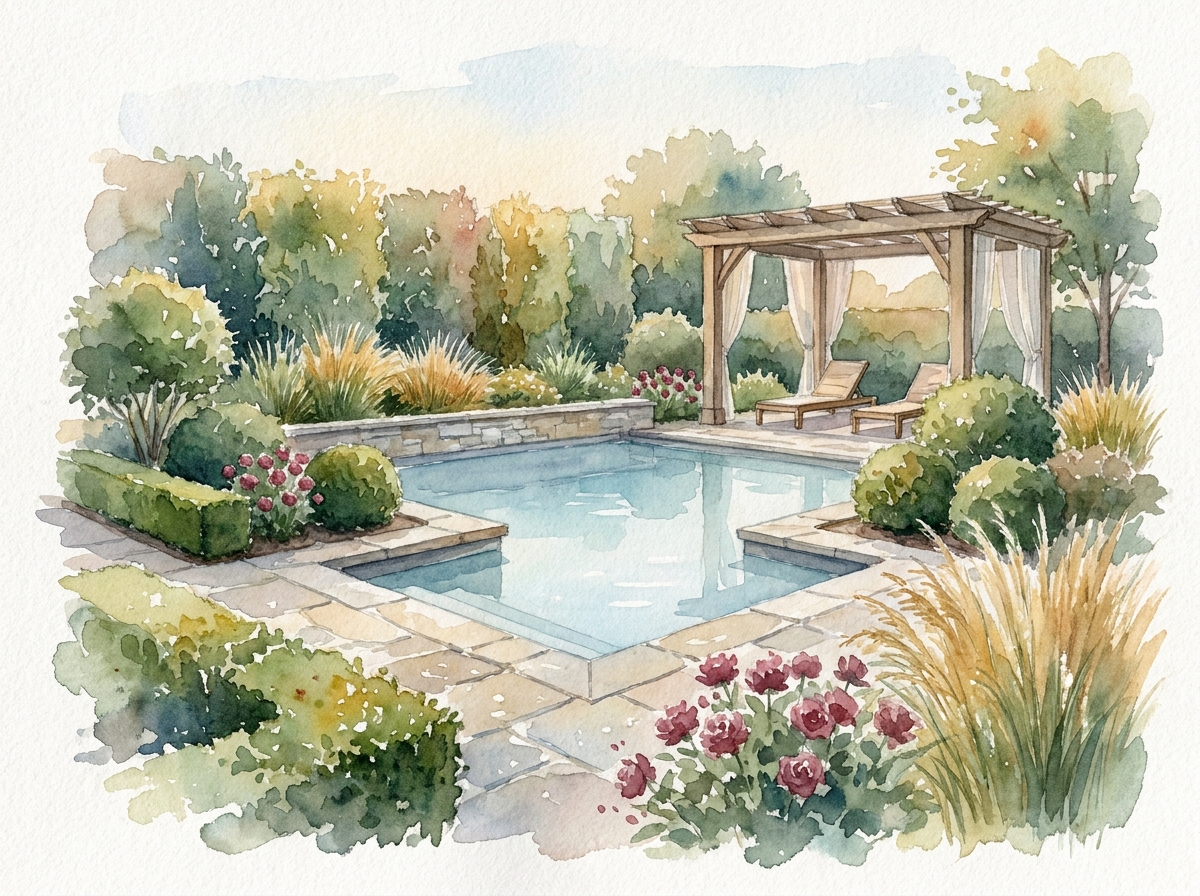
From the sample plan's printable report — the pond in year one, the deck in year two, the path in year three.
Questions people ask
▸Can I design a natural swimming pond before I dig?
Yes, that is what Painted Acre is for. Upload a photo of your backyard, draw the swim zone and the planted regeneration shelf directly on it, place the deck, the boulders and the beach entry, then drag the years forward to watch the planting fill in. You can try it on a sample yard first, and no account is needed.
▸Will the pond sit on my actual yard, or is it a generic picture?
Your photo becomes the canvas. Painted Acre paints your real lawn, fence line and tree line into watercolor, and the pond you draw sits on that ground at the scale you set. Every image on this page is real product output, not a stock photo.
▸How does it know which plants survive at my waterline?
Enter your ZIP and the palette filters to your USDA hardiness zone, so the cattail, iris and rush you place along the shelf are ones that overwinter where you live. Each species carries its own growth curve by age, which is why year 3 and year 12 are genuinely different pictures.
▸Can I build the pond in phases instead of all at once?
Yes, and most owners should. Every plant and structure carries the year it goes in, so the basin and swim zone can land in year one while the regeneration planting and the deck arrive later. The printable report breaks the shopping list out by year so you can see the spend spread across seasons.
▸What does Painted Acre actually produce?
An illustrative watercolor design plan: placement, plant choices, an honest view of growth over time, and a printable report with a to-scale plan view from above and a year-by-year shopping list. It is not an engineering or construction document. For excavation, water and grading, bring the plan to a qualified contractor and verify measurements, utilities and local codes first.