Drifts, not dots
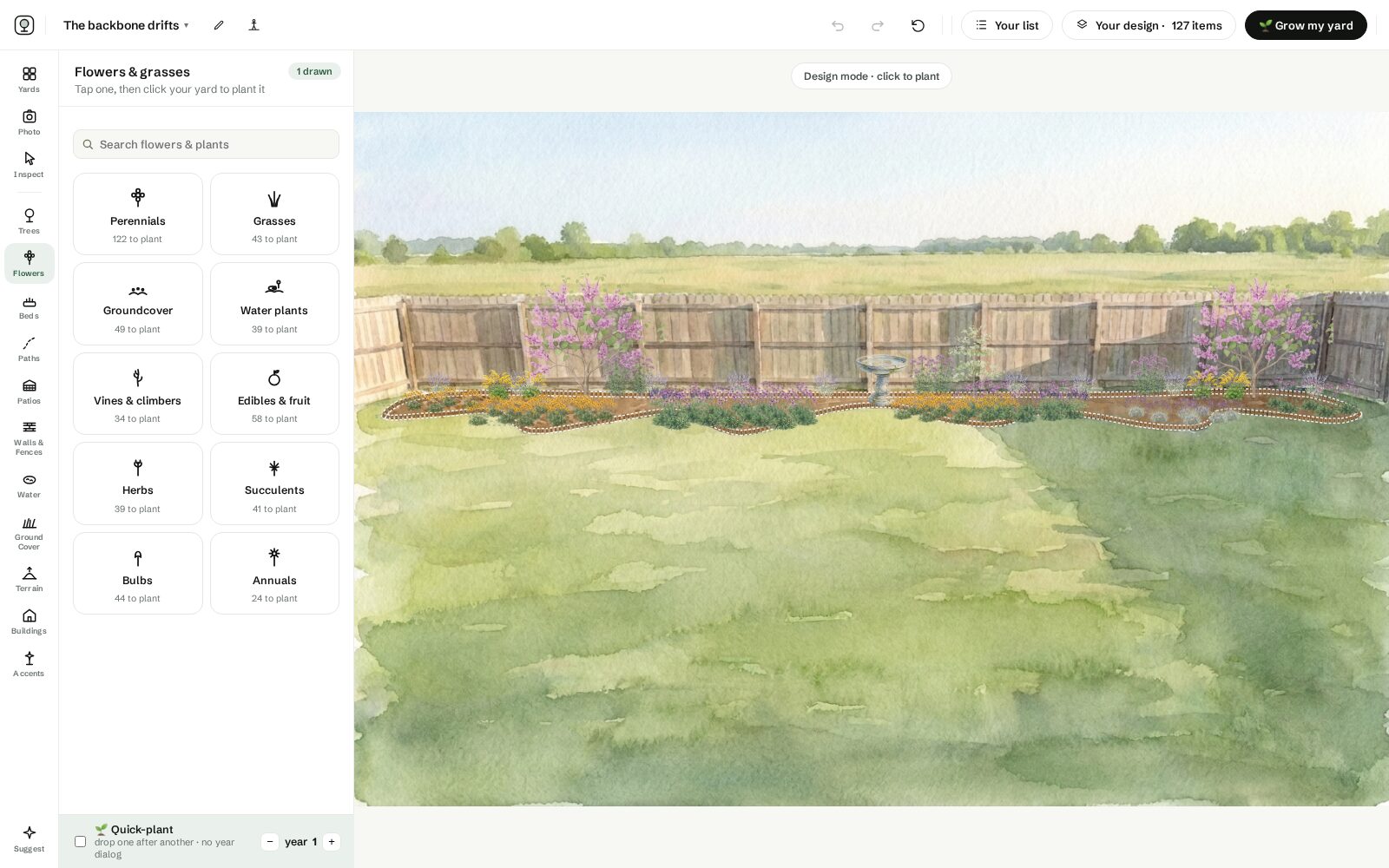
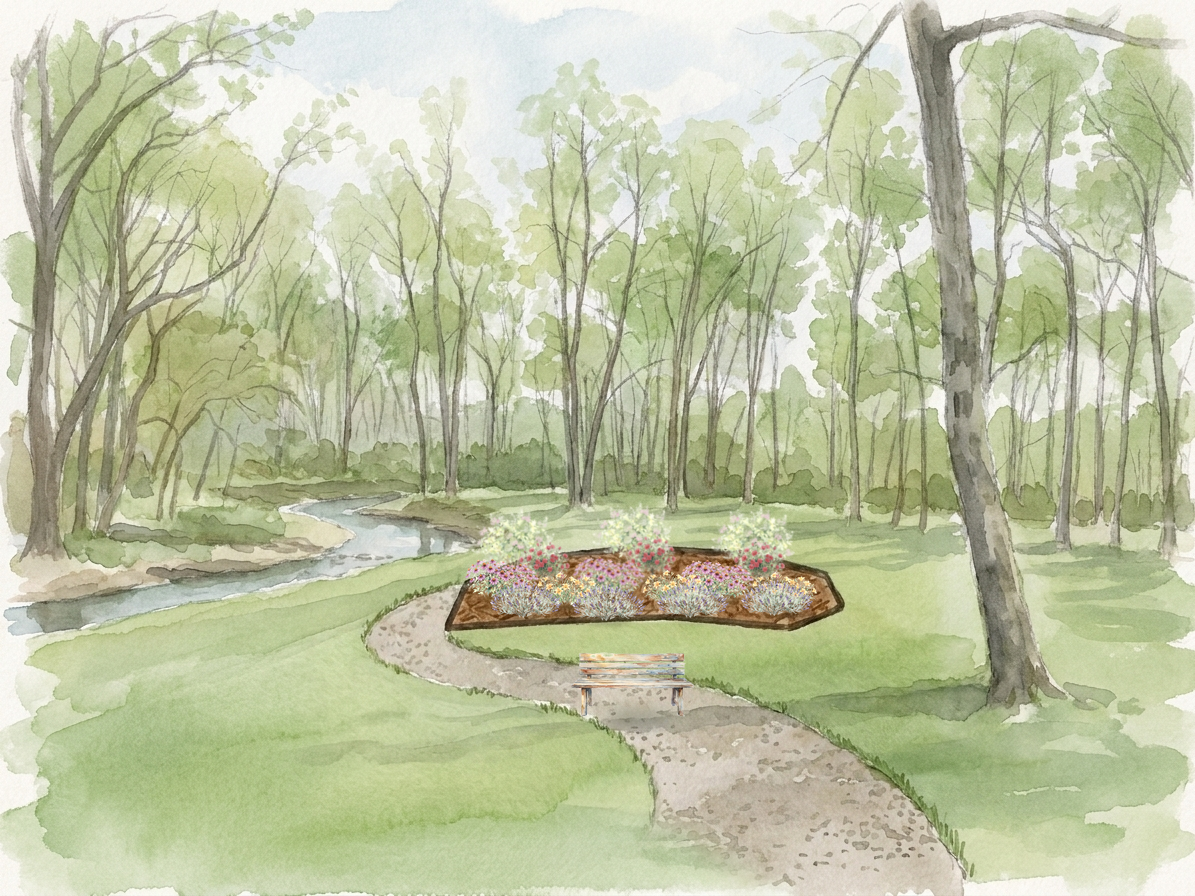
One coneflower is decor; twenty in a drift is habitat. Pollinators forage efficiently when a single species masses at least 3 by 3 feet, so design in swaths of five to nine plants and repeat the swaths. This is where seeing the plan painted at real scale beats a plant list: dots on graph paper always turn out too small.
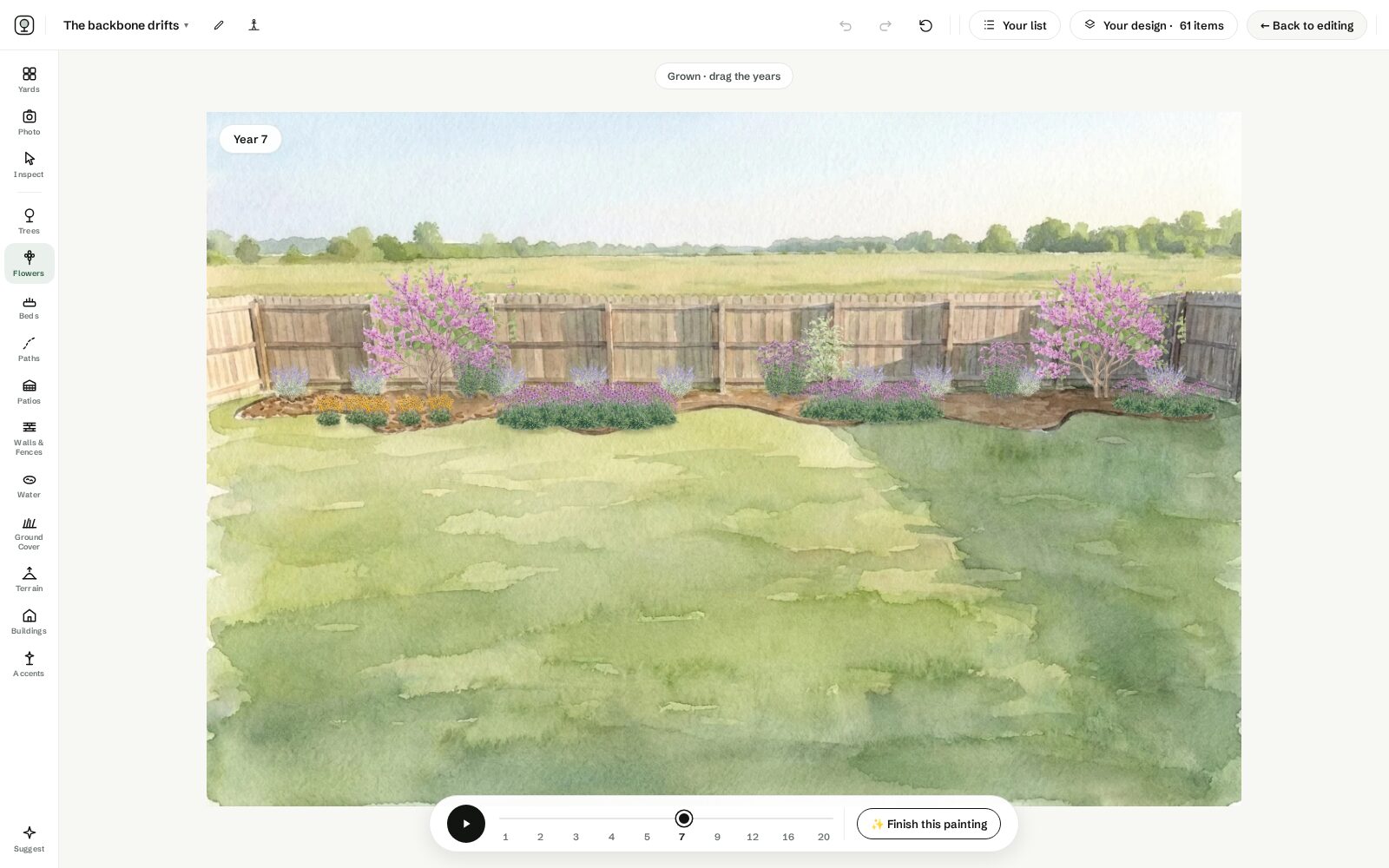
Year three of the sample plan — the drifts have closed and each species reads as one block.
Succession is the design
The garden needs something opening every week: creeping phlox and serviceberry for spring, coneflower and black eyed susan through high summer, russian sage carrying into fall. Leave the seed heads standing all winter, they are the bird feeder and next year is already paid for.
Skip the mulch volcano, plant the ground
Bare mulch between perennials is wasted habitat. Green groundcovers knit the floor, hold moisture, and host the ground-nesting bees that do most of the actual pollination. Densely planted beds also shade out most weeding after year two.
Plugs are cheap. Patience is the cost.
This is the rare yard project you can start for the price of a nice dinner: plugs cost a fraction of potted gallons and catch up within two seasons, so the real budget line is the year you plant, not the money. Start the backbone drifts now, add the fillers next spring, and let self-seeding do the fourth year for free. A year-by-year plan with a plug list, ready to hand a native nursery, is exactly what the printable Painted Acre report gives you.
The pollinator plan · Zone 6a Ohio
Year 1
The backbone drifts
The border itselfcut, edged and mulched the first weekend
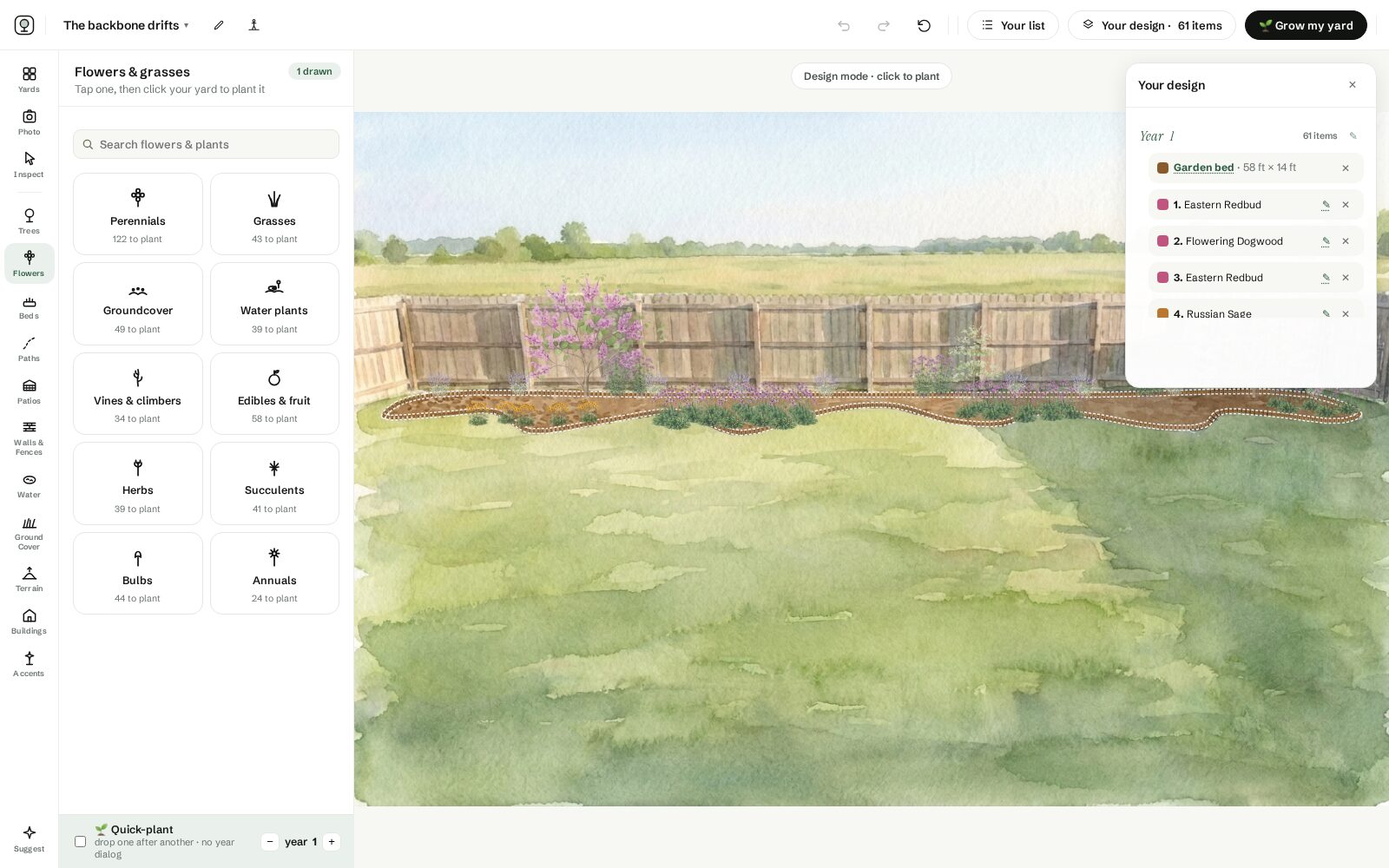
Redbud × 2 + Dogwood × 1whips · on the fence line over the border
Purple Coneflower × 37plugs · two drifts + the sunny-end clump
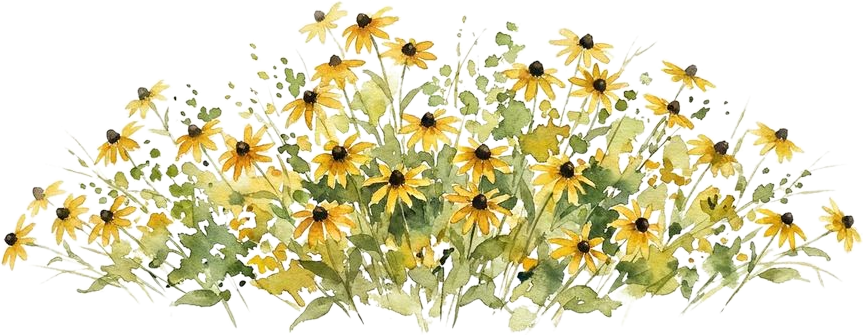
Black-eyed Susan × 31plugs · three patches down the run
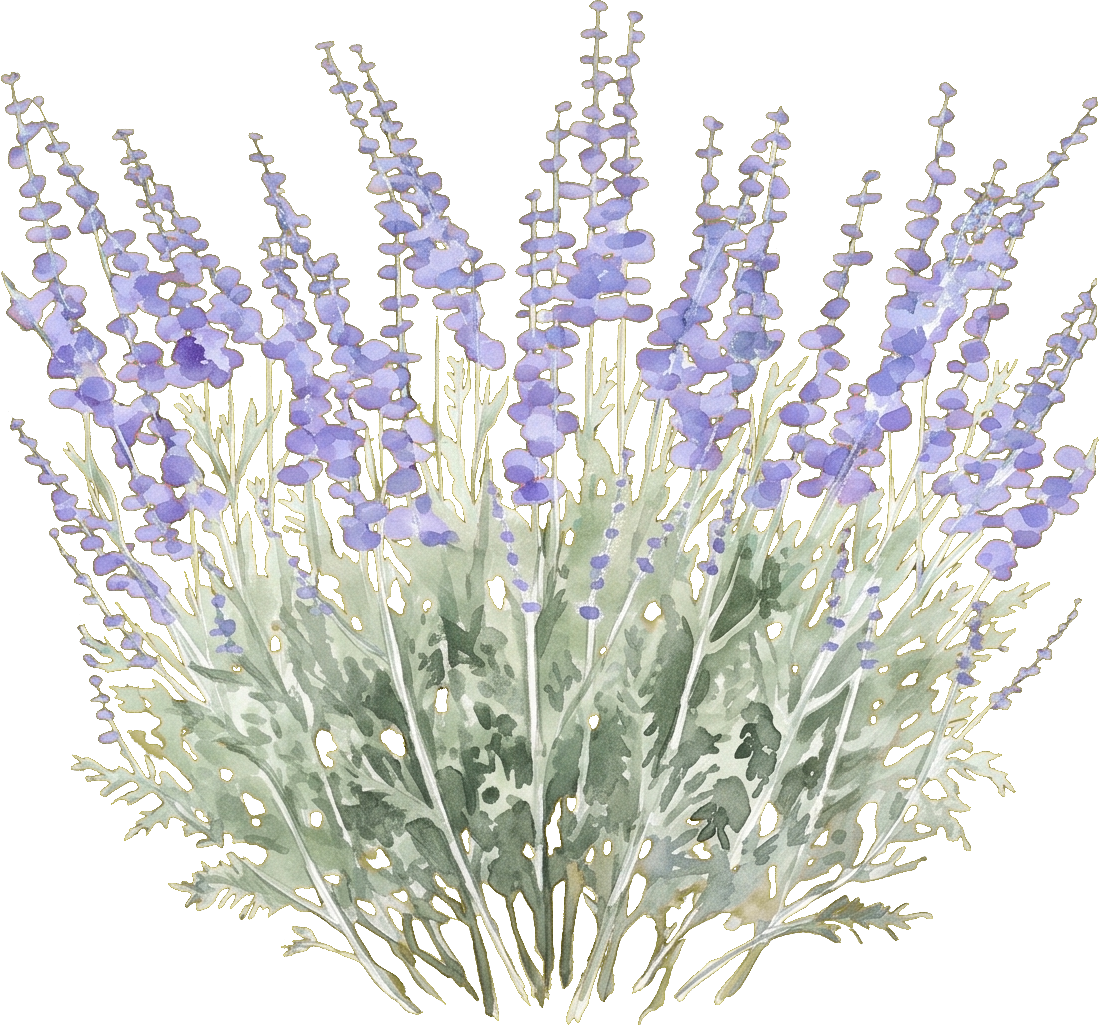
Russian Sage × 9 + Joe Pye Weed × 6gallons · the full back row
To do this year
Plant in early spring; water weekly through the first summer
Mulch 2 inches BETWEEN the drifts, not over the crowns
Leave the stems standing over winter — that is the habitat
Year 2
Close the gaps
Creeping phlox along the whole front edge
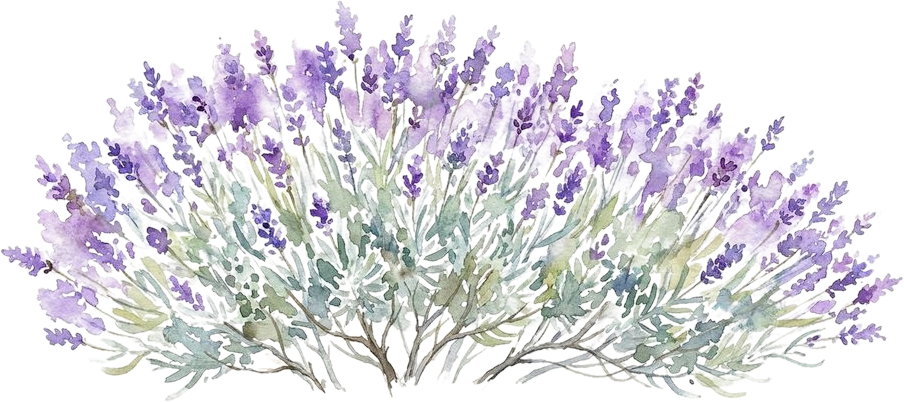
Lavender at the sunny end where the drainage is best
Salvia up front, goldenrod at the back — the May and October legs of the relay
Year 3
The water stop
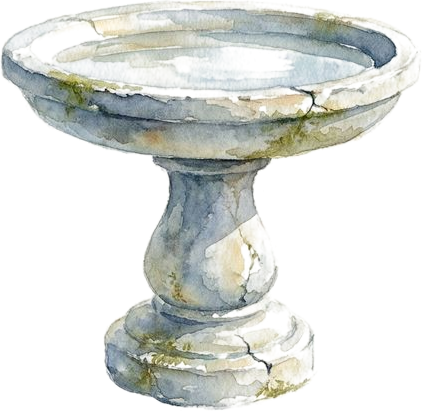
Set the birdbath basin at the centre of the drifts
By year 4: self-sown seedlings fill in for free
From the sample plan's printable report — the backbone in year one, the edges in year two, the water in year three.
The drifts, painted
A bloom relay from April to frost, every species painted at every age. Enter your ZIP and the palette narrows to what survives your winters, so every drift you sketch comes back next spring.
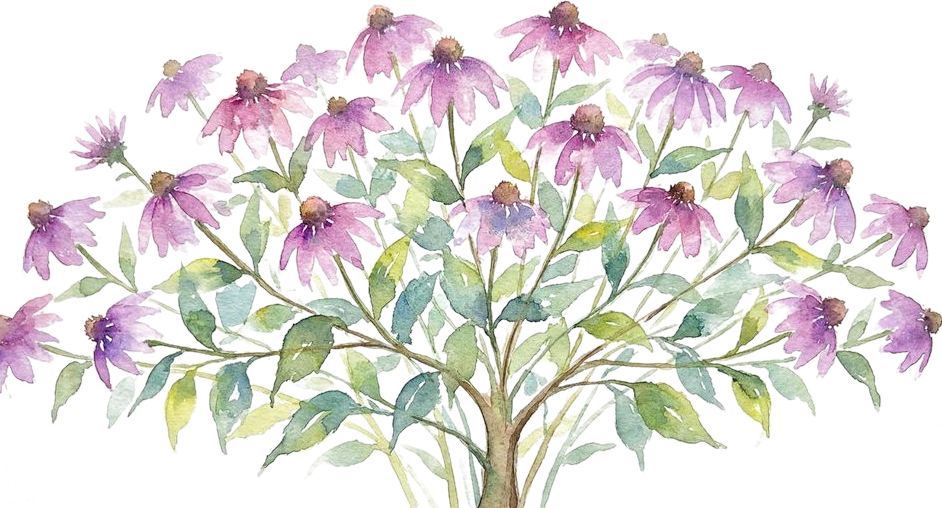
Purple Coneflower
The backbone drift: months of bloom, goldfinch seed heads after.
Zones 3–93 ft
Black-Eyed Susan
High-summer gold that bees mob; tough as pavement.
Zones 3–92 ft
Russian Sage
A silver-blue cloud from July to frost, carries the late season.
Zones 4–94 ft
Lavender
Bee magnet at the path edge, fragrance where you brush past.
Zones 5–92 ft
Creeping Phlox
The earliest food of the season, spilling color in April.
Zones 3–90 ft
Birdbath
Water is half of habitat; shallow with a landing rim.
Zones 1–133 ft
What to expect, honestly: Year 1: individual plants with mulch between, keep watering. Year 2: the drifts touch, weeding drops by half. Year 4: a self-sustaining meadow-edge that hums from April to October.
Questions people ask
▸Can I design a pollinator garden online?
Yes. Upload a photo of the bed or the patch of lawn you want to convert, place the drifts on it, then drag the years forward to watch them establish. You can try it on a sample yard first, and no account is needed.
▸Does it pick plants that suit my region?
Enter your ZIP and the palette filters to your USDA hardiness zone, so every drift you place is built from plants that survive your winters. Each carries its real mature spread, which is what the spacing in the plan view is drawn from.
▸Will it show the drifts filling in?
The year slider repaints the same planting at each age on real growth curves, so a bed that looks sparse and well spaced in year one reads as a full drift by year four. That gap is normally what makes people over-plant.
▸Can I plan it in phases?
Yes. Every plant carries the year it goes in, so you can start with one bed and extend the planting across later seasons. The report splits the shopping list by year with price estimates.
▸What do I get at the end?
A watercolor of the designed garden, the growth view from year one to year twenty, and a printable report with a to-scale plan view from above, a year-by-year plan and a shopping list.