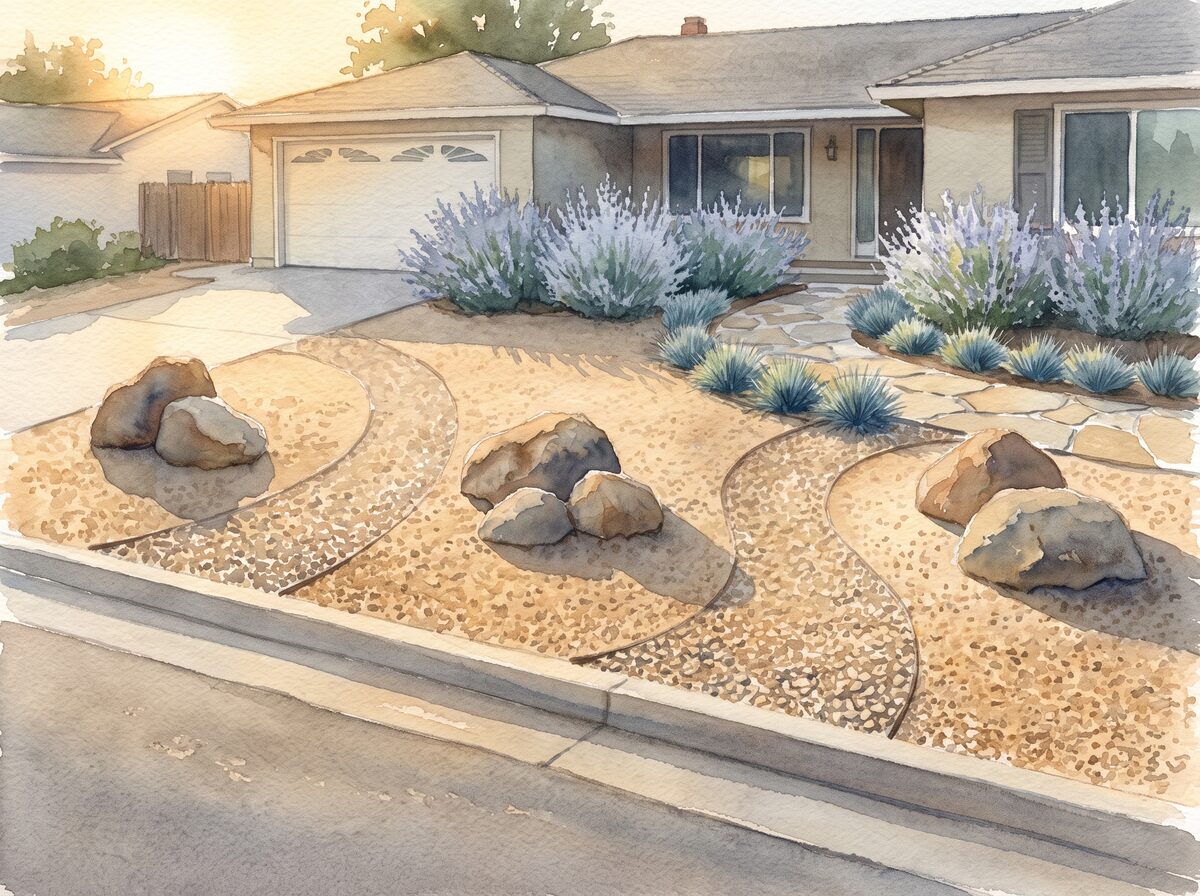
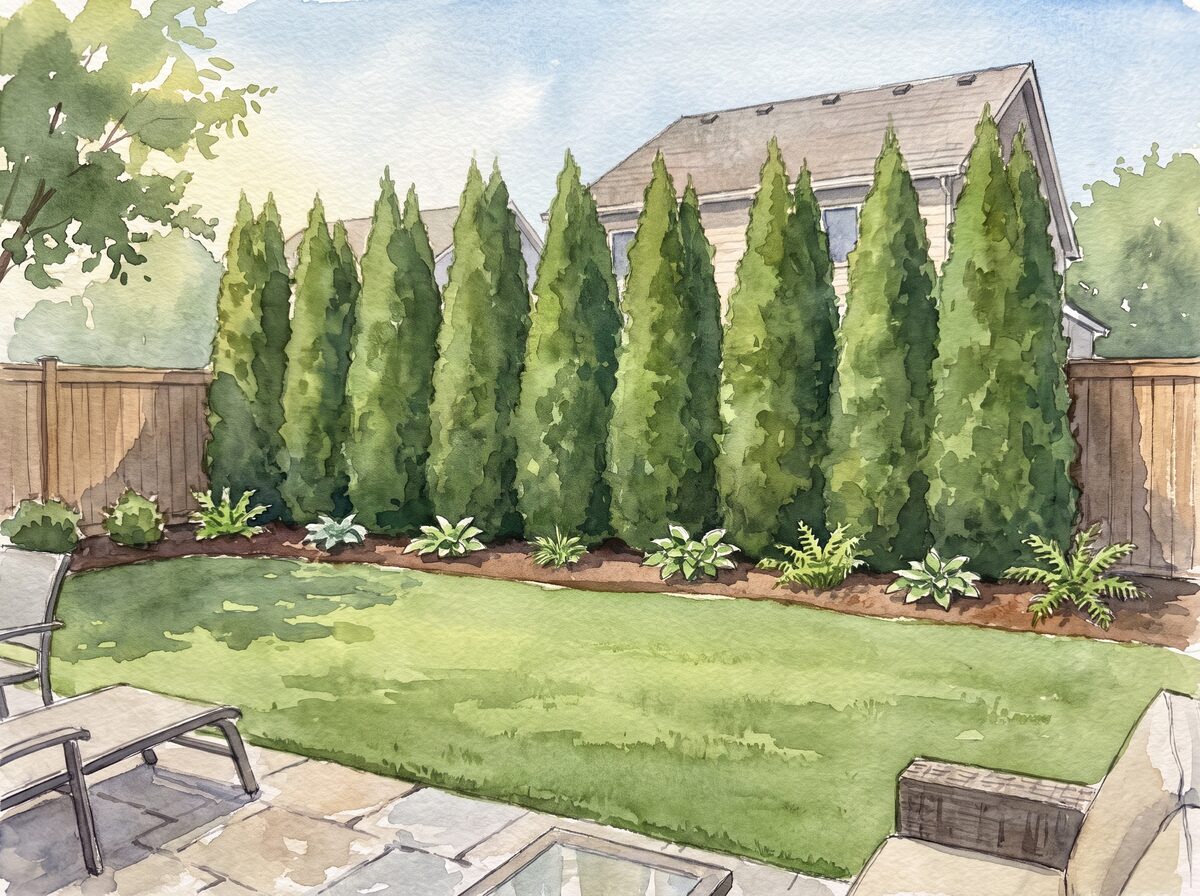
Year one is mulch. Year four reads.
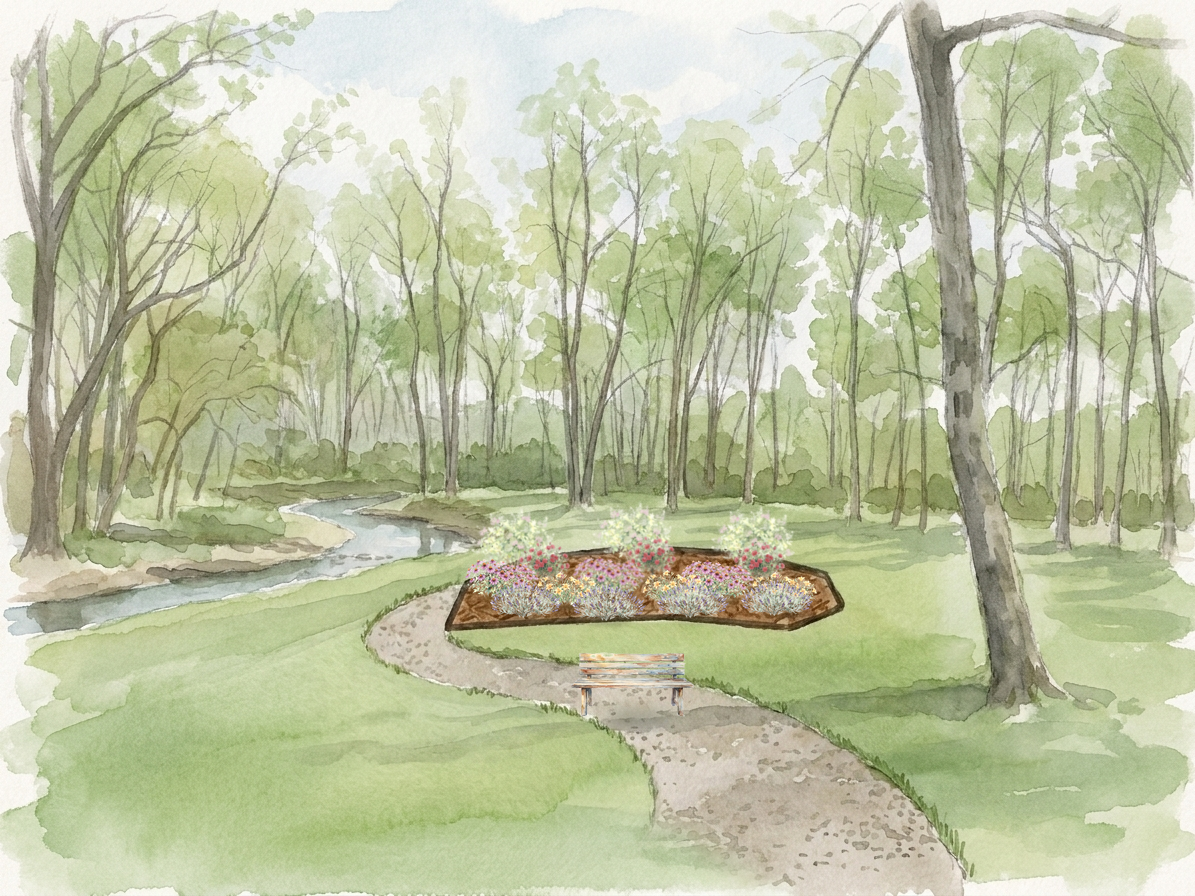
A front yard is the one place where the hardscape is finished the day it is poured and the planting takes four years to catch up. Year one looks sparse and correctly spaced, which is exactly what it should look like. Every frame below is the same sample plan rendered by the studio.
Frame the door, not the foundation
The eye should land on the front door. Taller plantings belong at the house corners, stepping down toward the entry, never a flat hedge line under the windows. One flowering specimen tree, placed off-center between the door and the corner, does more for a photo of your house than any amount of shrub shopping.
The 60 percent evergreen rule
A front yard is on stage in February too. Keep roughly 60 percent of the structure evergreen, boxwood, holly, juniper, so winter looks composed, and spend the other 40 on seasonal payoff: hydrangeas, roses, spring bulbs at the walk. The growth view shows whether your evergreen bones hold the picture in year eight or swallow the windows.
Widen the walk, soften the edges
Builder walks are 3 feet of regret. If you change one hardscape thing, widen the entry walk to 4.5 or 5 feet and let plantings spill slightly over the edges, low mounds like creeping phlox in front, knee-height color behind. Wide and soft reads as welcome; narrow and clipped reads as a service entrance.
The plants are the cheap part.
A front yard inverts the usual budget. Fifteen gallon shrubs and a young dogwood come to a few hundred dollars; tearing out the builder walk and pouring a new one comes to a few thousand. That is also the honest order of operations — a walk widened from three feet to five does more for the house than any plant you can put beside it — so if there is one check to write, write that one first and phase the planting over the next two springs. This is the one scenario on this site with a real resale argument, and it deserves an honest version of it: nobody appraises a dogwood, but the listing photo is the first thing a buyer sees, and edge, mulch, and a door you can find carry that photo. Selling inside a season? Do the weekend version above and skip the tree — a tree planted to sell a house belongs to whoever is standing here in year ten. A year-by-year plan with a shopping list, ready to hand a nursery or a concrete crew, is exactly what the printable Painted Acre report gives you.
The curb appeal plan · Zone 6a Ohio
Year 1
The walk and the bones
Entry walk widened to 5 ft28 linear ft · most of the budget
Flowering Dogwood × 16–8 ft B&B · off-center, 18 ft off the wall
Boxwood × 83-gal · four at each house corner
To do this year
Pull the old shrubs BEFORE the concrete truck comes, not after
Set every shrub half its mature width off the wall — 3 ft minimum
Mulch 2 inches, and keep the mulch line off the siding
Year 2
Color at the walk
Creeping phlox the whole length of both walk edges
Knockout rose on the sunny side of the walk
Hydrangea between the corner boxwood, out of the afternoon sun
Year 4
Hold the picture
First real shear on the boxwood — under the window sills, and keep it there
By year 7: the evergreen bones carry February on their own
From the sample plan's printable report — the concrete in year one, the color in year two, the shears from year four on, forever.
The framing palette, painted
A specimen for the lawn, evergreen bones for February, and color for the walk, each painted at every age. Enter your ZIP and the palette narrows to what thrives on your street.
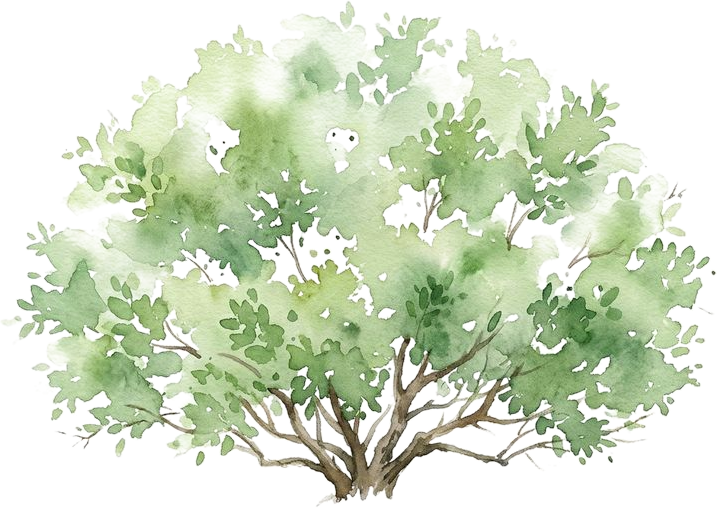
Flowering Dogwood
The specimen: four true seasons, scaled to a house instead of over it.
Zones 5–920 ft
Boxwood
The evergreen bones that keep February composed.
Zones 5–94 ft
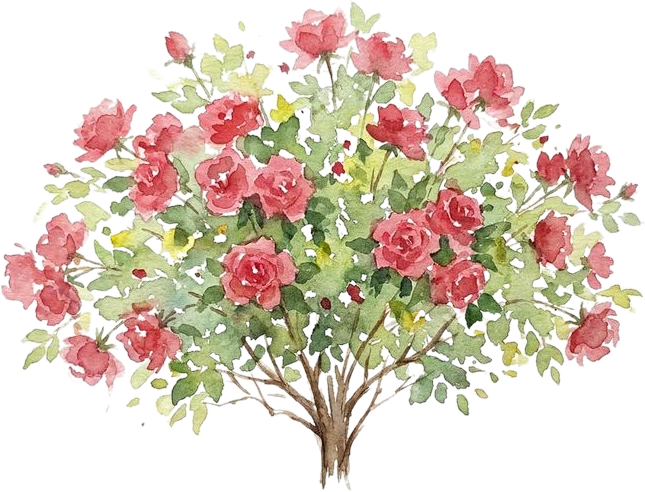
Knock Out Rose
Months of color at the walk with zero rose drama.
Zones 5–104 ft
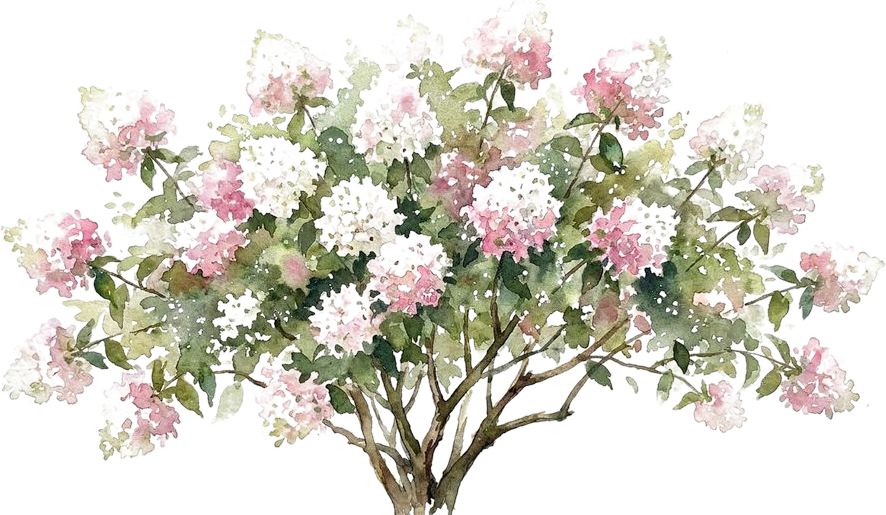
Hydrangea
The summer anchor between the corner evergreens.
Zones 3–86 ft
Creeping Phlox
April edge color spilling over the walk.
Zones 3–90 ft
What to expect, honestly: Year 1: fresh mulch and small plants, the widened walk already earns its money. Year 4: the composition reads, dogwood blooming over phlox. Year 10: the house sits in its frame, and the corner evergreens are why the winter photo still works.
Questions people ask
▸Can I see a new front yard on a photo of my own house?
Yes, that is the product. Upload a photo of your frontage, Painted Acre paints it into a watercolor canvas, and the beds, the walk and the specimen tree all get placed against your real house. You can try it on a sample yard first, and no account is needed.
▸Can I check foundation spacing before I buy the shrubs?
The report draws your design from directly above to scale, with each shrub at its full mature spread. Planting too close to the wall is the most common front yard mistake, and seeing the mature circles overlap on paper is what stops it.
▸Will it show the flowering tree at full size?
The year slider repaints the design at each age from real growth curves, so the young tree of year one reaches the scale that actually frames the house only in the year it would really do so.
▸Can I try it before paying?
Yes. Design on a painted sample yard first and watch it grow, as often as you like. You can also send one photo of your own house and we will paint it into a watercolor at no charge, then lay out the whole design on it. Growing your own yard through the years is the paid part: $49 once, with five repaints as the design changes.
▸What do I get at the end?
A watercolor of the designed frontage, the growth view from year one to year twenty, and a printable report with a to-scale plan view from above, a year-by-year plan and a shopping list with price estimates.